- LET'S PLAN YOUR SAFARI
- +256 200 921 002
- +256 793 194 703
- info@rwandagorillatrekkingtours.com

Wildlife in Rwanda and Gorillas in Uganda in One Tour
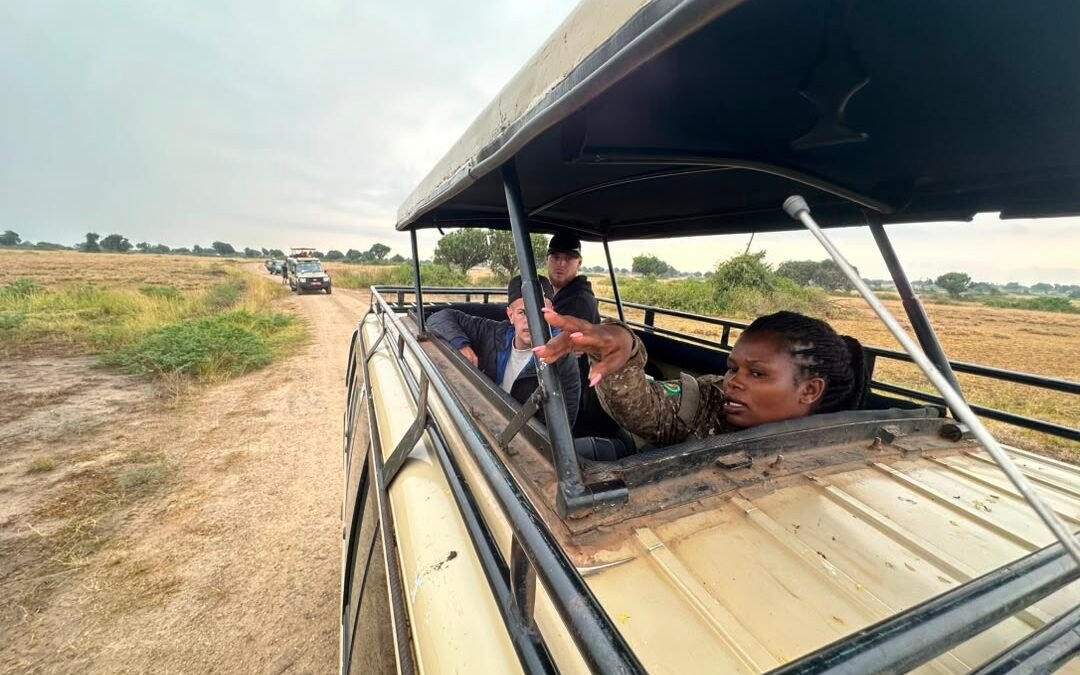
Wildlife in Rwanda and Gorillas in Uganda in One Tour. Most travellers think of East Africa’s wildlife as a choice: gorillas in one country, savannah animals in another, and a separate flight or long drive between them. A combined tour removes that choice. You start in Kigali, spend your first days on Rwanda’s wildlife, then cross the border by road and meet the mountain gorillas of Uganda, all under one itinerary with one driver-guide and one plan for permits. The result is a trip that covers game drives, boat safaris, forest primates and gorilla tracking in roughly a week or ten days, without the expense of two entirely separate holidays.
The logic is simple. Rwanda is compact, and its main parks lie within a few hours of Kigali, so it is a good place to begin. Its savannah reserve, Akagera National Park, offers game drives and boat trips, and its forests hold chimpanzees and monkeys. Uganda, meanwhile, offers gorilla tracking at a lower published permit price and a choice of forest sectors. Put the two together and each country does what it does best. Our team at Rwanda Gorilla Trekking Tours plans trips in Rwanda, and our page on Rwanda and Uganda gorilla safaris shows how the two countries can be joined.
What This Guide Covers
This guide explains why a two-country route works, what wildlife to expect in each part of Rwanda, how to choose your gorilla sector in Uganda, how the route flows day by day, how the border crossing and visas work, when to travel, and how to budget and book. Wherever a fact comes from an official body, we link to it, so that you can check the current details before you commit.
A few headline facts set the scene. The official Akagera National Park website describes a park of 1,200 square kilometres in Rwanda’s Eastern Province, about two hours’ drive (110 km) from Kigali. According to the Uganda Wildlife Authority, Bwindi Impenetrable National Park is home to about 459 mountain gorillas, which UWA describes as almost half of the world’s population. Between those two points lies a route that can be covered by road, and our Akagera National Park and Uganda gorilla trekking pages give you more detail on each end. If you already have dates in mind, send them through our contact page and we can talk through what is realistic.
Why Combine Rwanda and Uganda Instead of Choosing One?
Both countries offer wildlife, and either could carry a whole trip on its own. The reason to combine them is that their strengths do not overlap as much as you might expect. Rwanda’s savannah park sits close to Kigali, so a game drive is easy to add at the start of a journey. Uganda’s gorilla forests offer a lower published permit price and a choice of sectors. By using each for what it does best, you get a fuller trip than either country would give you alone, and you avoid paying for the same experience twice.
What Each Country Does Best
The table below summarises the main differences for a traveller who wants both savannah wildlife and gorillas. It uses published figures where they exist and marks the ones that should be confirmed before you book.
| Experience | Rwanda | Uganda |
|---|---|---|
| Savannah game drives | Akagera National Park, about 110 km and two hours from Kigali | Several larger savannah parks, but further from the border with Rwanda |
| Boat safari | Lake Ihema boat trips in Akagera | Boat cruises in parks such as Queen Elizabeth |
| Forest primates | Chimpanzees and other monkeys in Nyungwe, golden monkeys at Volcanoes | Chimpanzees in Kibale and other forests |
| Gorilla permit price | US$1,500 for a foreign visitor | US$800 at the previous published tariff (confirm current) |
| Gorilla sectors | One park, Volcanoes, with twelve habituated families | Four Bwindi sectors and Mgahinga |
| Travel time from Kigali | Short | Longer, because the gorilla forests are further away |
The Case for One Tour Rather Than Two Trips
A single combined tour saves money and time. You pay for one set of flights into and out of the region, one vehicle and driver-guide for the whole route, and one plan for permits and accommodation. You also avoid duplicated transfers, because you cross the border once and continue by road. Our page on Rwanda safari tours shows how Rwanda’s parks fit together, and the Rwanda and Uganda gorilla safaris page explains the idea of joining both countries.
The gorilla permit is the clearest financial reason. Visit Rwanda lists the foreign-visitor gorilla permit at US$1,500, while the UWA rates page shows US$800 for a foreign non-resident in the tariff that ran from July 2024 to June 2026. That schedule has reached its end date, so treat US$800 as the most recent published price and confirm the current figure with UWA or your operator. If you would rather track gorillas in Rwanda, our Rwanda gorilla permit page explains how we arrange permits, and the combined tour still works with Rwanda’s gorillas; it simply costs more.
A Fair Note on the Alternatives
This is not the only sensible route. Uganda has its own savannah parks and Rwanda has its own gorillas, so some travellers stay in one country and skip the border crossing. A combined tour makes most sense when you want a short, easy game-viewing start close to Kigali, a lower-priced gorilla permit, and enough days to enjoy the drive between the two. If you have only three or four days, a single-country trip is usually more realistic.
Wildlife in Rwanda: Akagera National Park at a Glance
Akagera is the anchor of the Rwandan half of this tour. The official Akagera National Park website describes a park of 1,200 square kilometres in the Eastern Province, on the Tanzanian border, with about one third of its area covered by water. It lies about two hours’ drive (110 km) from Kigali, which is why it works so well as the opening chapter of a trip. Visit Rwanda describes a landscape of savannah, woodland, wetland and a dozen lakes, and our own page on Akagera National Park gives more background for planning.
The Animals You Can Expect to See
Akagera’s wildlife recovery is one of the more remarkable stories in East African conservation, and it is the main reason travellers now add Rwanda to a safari. According to the park’s official site, lions were reintroduced in 2015, eastern black rhinos in 2017 and southern white rhinos in 2021. Visit Rwanda says the park hosts the Big Five, with a family of lions from South Africa breeding successfully and 18 eastern black rhinos reintroduced. Beyond those headline species, the park lists leopard, elephant, buffalo, zebra, giraffe, antelope and baboons, and Visit Rwanda cites 490 bird species.
As with any wild place, sightings cannot be guaranteed. Rhinos and leopards in particular are hard to find, so treat them as a bonus and enjoy the hippos, giraffes, zebras and birds that are much easier to see. A good guide makes a real difference, because reading tracks and behaviour is how animals are found.
Game Drives, Boat Trips and Other Activities
The park’s own site lists several ways to see the wildlife. You can take guided game drives with community guides, or self-guided day drives between 6 am and 6 pm. Boat trips on Lake Ihema, which Visit Rwanda says feature hippos, Nile crocodiles and waterbirds, run at scheduled times that the park lists as 7:30 am, 9 am, 3 pm and 4:30 pm. Night drives are available for overnight guests, and other activities named on the site include fishing on Lake Shakani, hot air balloon experiences and a 7 km fence excursion called Walk the Line that takes about two hours. Schedules and prices change, so check the official site or ask your operator to confirm them for your dates.
For most combined tours, the sensible plan is one full day of game drives and one boat trip. That gives you a taste of the savannah without eating into the time you need for the border crossing and the gorillas. Our Rwanda safari tours page shows how Akagera can be paired with other parts of the country.
Where to Stay in Akagera and How Many Days to Allow
The park’s official site lists lodging options that include Ruzizi Tented Lodge, Karenge Bush Camp, four campsites, Wilderness Magashi Camp and SALT of Akagera, so there are choices across several price levels. Self-drive access is through the southern Mutumba Gate only, and the park recommends 4×4 vehicles in the wet season, which is another reason to travel with a driver-guide who knows the roads.
Two nights inside or near the park is a comfortable minimum. It gives you an evening arrival, a full day of drives, a boat trip and a relaxed departure. If you are short of time, one night is possible, but you will spend much of it in the vehicle. Before you head north, a Kigali city tour is an easy way to use a spare morning at either end of the trip.
More Rwanda Wildlife: Golden Monkeys, Chimpanzees and Forest Primates
Savannah animals are only part of Rwanda’s wildlife story. The country’s forests hold a rich set of primates, and Visit Rwanda’s primate tracking page is a useful overview. Two of these experiences fit naturally into a combined tour, depending on how many days you have.
Golden Monkey Tracking at Volcanoes National Park
Golden monkeys are the easiest primate add-on for a tour that continues north towards Uganda, because they live in Volcanoes National Park, close to the route you will drive anyway. Visit Rwanda says golden monkey tracking is offered as a standalone excursion that departs once daily from Kinigi headquarters, with two trackable groups on the slopes of Mount Karisimbi and in the bamboo forest of Mount Sabyinyo. The Rwanda Development Board’s golden monkey tracking page describes them as having bright orange fur that contrasts with the green rainforest, and living in troupes of up to 30. It lists a permit at US$100 for foreign adults, a minimum age of 12, a maximum of 16 visitors per group and a 7 am report time.
Because the report time matches the gorilla briefing at Kinigi, the two activities cannot be done on the same morning. On a combined tour that is not a problem, since your gorilla trek will be in Uganda. Golden monkeys therefore make a good half-day stop in Musanze before you cross the border. Our page on golden monkey tracking in Rwanda explains the experience, and our page on Volcanoes National Park describes the area around it.
Chimpanzees, Colobus and Canopy Walking in Nyungwe
Nyungwe National Park in the south-west is Rwanda’s great forest for primates. Visit Rwanda’s canopy walkway page says the forest is home to thirteen primate species, and describes a suspended walkway that is 160 metres long and 70 metres high, reached after about an hour’s walk from the Uwinka Reception Centre. The primate tracking page adds that chimpanzee tracking starts early, at 5:30 am, and can last from an hour to several hours, with a maximum of one hour spent with the animals once they are found. It describes the terrain as steep, slippery and muddy, so you need suitable footwear and reasonable fitness. Other species named there include black-and-white colobus monkeys and L’Hoest’s monkeys, which are endemic to the Albertine Rift.
Nyungwe lies well away from Kigali and from the Uganda border, so it suits a longer itinerary rather than a compact one. If you have ten days or more, it is a rewarding addition, and you can read more on our Nyungwe National Park page. If you have a week, it is usually wiser to choose Akagera and golden monkeys and leave Nyungwe for another trip.
Choosing Which Rwandan Wildlife Stops to Include
A simple rule helps. For a week-long tour, choose Akagera plus, if time allows, golden monkeys. For ten days, add either a longer stay in Akagera or a trip to Nyungwe. For two weeks, you can include all three and still have a relaxed pace in Uganda. Whichever you choose, ask your operator to confirm the driving time between each stop, because the distances add up quickly.
Gorillas in Uganda: Bwindi, Mgahinga and What to Expect
The second half of the tour is the gorilla trek, and Uganda offers two destinations for it. According to the Uganda Wildlife Authority, Bwindi Impenetrable National Park is home to roughly 459 mountain gorillas, which UWA describes as almost half of the world’s population. The park spans steep, forested ridges from about 1,160 to 2,607 metres above sea level, and tracking is organised in four sectors: Buhoma, Ruhija, Rushaga and Nkuringo. Uganda’s second option, Mgahinga Gorilla National Park, has one habituated group and offers about eight permits a day.
The experience itself follows the same principles as in Rwanda. You attend a briefing, walk with rangers and trackers to a habituated gorilla group, and spend up to one hour with the animals. The minimum age is 15. The main difference is the walk. The UWA gorilla tracking guidelines describe treks of about two to seven hours, and UWA’s older Bwindi factsheet describes anything from a few hours to a whole day, so prepare for a demanding morning.
Choosing a Sector When You Arrive From Rwanda
Because you are entering Uganda from the south, your choice of sector is partly a question of geography. Sectors in the south of Bwindi, and Mgahinga near the town of Kisoro, are commonly used by travellers who cross from Rwanda’s north-west, while other sectors may involve a longer drive through Kabale. The right answer depends on which gorilla groups have permits available for your dates, so ask your operator to check availability first and then choose the lodge that matches. The Pick and Transfer Safaris page on Ikoro Hotel in Kisoro is one accommodation option to look at if Kisoro is on your route, and their article on what to do after a gorilla tour in Bwindi helps with planning the days that follow the trek. We have linked these pages by title, so please confirm current details with the operator.
Permit Price: Where the Savings Come From
The published price gap is the strongest financial argument for tracking in Uganda. Visit Rwanda lists the foreign-visitor permit at US$1,500. Under the tariff that ran from July 2024 to June 2026, UWA listed a gorilla permit at US$800 for a foreign non-resident, US$700 for a foreign resident and UGX 300,000 for an East African citizen. The tariff also lists a separate, higher-priced gorilla habituation experience. Because that schedule has ended, confirm the current Ugandan price with UWA or your operator before you plan around it.
For a couple, the published figures imply about US$1,400 saved on two permits (US$3,000 in Rwanda against US$1,600 in Uganda), which is why so many combined itineraries put the gorillas in Uganda. If you would like to compare it with a Rwanda trek, our Uganda gorilla trekking page explains the Ugandan side, and you can send your dates through the booking page to ask about both.
Beyond the Trek: Other Wildlife on the Uganda Side
If you have extra days, Uganda offers chimpanzees and savannah wildlife that can extend the tour. UWA says Kibale National Park holds more than 1,500 chimpanzees, and Queen Elizabeth National Park covers 1,978 square kilometres with more than 95 mammal species. Both lie further north, so add them only if you are ready to lengthen the trip.
The Route: How the Tour Flows From Kigali to the Gorillas
The combined tour follows a natural line. You arrive in Kigali, travel east to Akagera for the savannah, return through Kigali and go north to the Volcanoes region, then cross into south-west Uganda for the gorillas. Two distances anchor the Rwandan half: the official Akagera site gives about two hours (110 km) from Kigali, and the Volcanoes National Park getting-there guide gives about 104 to 105 kilometres and two to three hours from Kigali to the park. The Ugandan half depends on your border crossing, which the next section covers.
A Sample 8-Day Itinerary
The table below is an illustrative structure, not a fixed package. Drive times are approximate, and several of them are private-operator estimates, so ask your operator to confirm the timings for your dates and your chosen sector.
| Day | Plan | Notes |
|---|---|---|
| 1 | Arrive in Kigali | Rest, or add a city tour |
| 2 | Kigali to Akagera National Park | About two hours by road; afternoon game drive |
| 3 | Akagera game drive and Lake Ihema boat trip | Boat trips run at scheduled times; check the current timetable |
| 4 | Akagera to the Volcanoes region | A long travel day via Kigali; overnight near Musanze |
| 5 | Golden monkey tracking, then travel to the border | 7 am report time; cross into Uganda if time allows, or stay near the border |
| 6 | Gorilla trek in Uganda | Sector and start time depend on your permit |
| 7 | Rest day or scenic drive | A buffer for tired legs and delays |
| 8 | Return to Kigali or continue to Entebbe | Confirm the drive time and flight times in advance |
The structure has a built-in buffer. Day 7 is deliberately light, because gorilla treks can run long and border crossings can take time. Treat that spare day as insurance rather than an optional extra.
Shorter and Longer Versions
If you have less time, drop the boat trip and one of the Akagera days, or skip the golden monkeys. If you want to lengthen the trip, add nights in Akagera, a Nyungwe extension or Ugandan parks such as Kibale and Queen Elizabeth. Our 3 days Rwanda gorilla safari and 4 days Rwanda gorilla safari pages show how a compact Rwanda section can look, and the Rwanda and Uganda gorilla safaris page shows how it can be joined to Uganda.
One-Way Routes: Fly Into Kigali, Fly Out of Entebbe
You do not have to return to your starting point. A one-way route, arriving in Kigali and leaving from Entebbe, avoids retracing the road. Pick and Transfer Safaris addresses this idea in its article on whether you can begin your tour from Kigali Airport and end in Entebbe Airport. Read it alongside your operator’s advice, because a one-way route affects the driving time, the vehicle arrangements and the price.
Crossing the Border From Rwanda Into Uganda
The border crossing is the most technical part of a combined tour, but it is manageable with preparation. Two crossings are commonly used between northern Rwanda and south-west Uganda. Private operators generally describe Gatuna (also called Katuna) as roughly 80 kilometres and two hours from Kigali, open around the clock, with the drive on to Kabale at about 140 kilometres and three to four hours from the capital in total. Cyanika, which is more convenient after the Volcanoes region, is usually quoted at about 119 kilometres and around three hours via Musanze, with opening hours of roughly 6 am to 10 pm. These are operator estimates rather than official timings, so ask your driver to confirm the route, the border hours and current road conditions before you fix a schedule.
Vehicle Paperwork and Transfers
Crossing by road in a private vehicle usually adds paperwork. Operators mention a COMESA Yellow Card for third-party insurance, which they quote at about US$40 to US$50 for 14 days. Ask your operator whether one vehicle and driver will cross with you or whether the vehicle changes at the border, and what each arrangement costs, so that there are no surprises. You can also send questions through our contact page while you compare plans.
Visa Rules for Uganda
Uganda’s immigration authority now requires visa-prone travellers to apply online and does not issue visas on arrival to them. The tourist visa page lists a single-entry tourist visa at US$50, and it is wise to apply at least 10 days before you travel. A yellow fever vaccination certificate is required.
If you will visit Rwanda and Uganda on one trip, the East Africa Tourist Visa is worth considering. It costs US$100 and covers Uganda, Kenya and Rwanda, but the first entry must be into the country where you applied. On this tour you start in Rwanda, so plan the application accordingly and read the current conditions on the official page before you pay.
Visa Rules for Rwanda
Rwanda is easier on arrival. Visit Rwanda’s immigration and visa page explains that visitors can obtain a visa on arrival, that citizens of East African Community countries can stay up to six months without a visa, and that the fee is at most US$50. The Directorate General of Immigration and Emigration lists visas issued under special arrangement, including a free 30-day stay for citizens of African Union, Commonwealth and Francophonie member states.
Visa rules change, and your nationality decides which category applies to you. Confirm everything on the official pages before you book flights, and check that your passport is valid for the whole trip with enough blank pages for two sets of stamps. When you are ready to plan, use the booking page to send your nationality, your dates and your preferred route.
Best Time to Go: Seasons for Savannah and Gorillas
Gorillas can be tracked all year, but the weather changes how the walk feels. A seasons guide on volcanoesnationalpark.org describes a long dry season from June to September and a short dry season from December to February, with rainy periods from March to May and from October to November, and it calls March and April the wettest months. You can read the full explanation on its best time to go gorilla trekking page. In the dry seasons the ground is drier and the walking is less challenging.
Savannah viewing has its own logic, and sources differ slightly. The official Akagera site lists November to April as its suggested visiting period, while the Rwandan seasons guide points to June to September and December to February as the drier months. Because the two do not match exactly, ask your operator which months suit the animals you most want to see, and note that December to February appears in both as a sensible window. Wherever you travel, pack a rain jacket, because rain can fall in any season.
Availability matters as much as weather. Permits are limited, and popular dates fill early, so start planning several months ahead if your dates are fixed. Our blog has further planning tips.
Building the Budget for a Combined Tour
A combined tour has more moving parts than a single-country trip, so it helps to see the budget in lines. The lines below are the ones to ask your operator to itemise.
| Budget line | What to check |
|---|---|
| Gorilla permit in Uganda | Current UWA price; US$800 was the previous published price for a foreign non-resident |
| Golden monkey permit in Rwanda | US$100 for foreign adults on the RDB page; confirm current price |
| Akagera entry, boat trip and activities | Current park fees and boat timetable on the official site |
| Vehicle and driver-guide | Days, fuel and border arrangements |
| Accommodation | Nights in Akagera, Musanze, the Uganda gorilla area and Kigali |
| Visas, insurance and paperwork | Visa fees, the East Africa Tourist Visa, and any vehicle paperwork at the border |
| Tips and porters | Small amounts, but plan for them |
As a permit-only example, a couple who track gorillas once each in Uganda and golden monkeys once each in Rwanda would pay roughly US$1,600 for gorilla permits at the previous published price and US$200 for golden monkey permits, about US$1,800 in total, before any other cost. Doing the gorillas in Rwanda instead would raise the gorilla permits to US$3,000 at the published figure of US$1,500 each. These are planning numbers rather than quotes.
Sequence Your Permits Wisely
Book the scarcest item first. Gorilla permits in Uganda are limited per group and per sector, so fix that date first and then plan the Rwanda days backwards from it. That way, the golden monkey and Akagera days flex around a permit that cannot move. Our Rwanda gorilla permit page explains how we approach permit booking on the Rwanda side, and the RDB booking portal is the official place to see current Rwandan permit categories.
How to Prepare for a Two-Country Wildlife Tour
A combined tour asks you to pack for savannah heat, forest mud and a long road. Bring lightweight, neutral-coloured clothing for game drives, and waterproof hiking boots, long trousers, long sleeves, gloves and a rain jacket for the gorilla and monkey treks. Visit Rwanda’s Volcanoes National Park profile says gaiters and a lightweight waterproof are useful in the rain. Add sunscreen, a hat, insect repellent, a daypack, plenty of water and a camera with a zoom lens and a spare battery. Keep your passport, permit confirmations and visa documents in a waterproof pouch.
Follow your guide’s instructions on how close to stand to the gorillas. The Rwanda gorilla trekking rules summary and UWA’s gorilla tracking guidelines both set out the rules for their own countries, and your briefing will repeat them. Anyone who is unwell with a contagious illness should tell the rangers, because gorillas are vulnerable to human infections.
Fitness, Health and Insurance
A gorilla trek in Uganda can last anywhere from about two to seven hours, and Rwandan chimpanzee tracking is described as steep and muddy, so a few weeks of hill walking before you travel will make the trip more enjoyable. Speak to a doctor about vaccinations well before departure, since Uganda requires a yellow fever certificate. Buy travel insurance that covers medical treatment, evacuation and cancellation, and carry your emergency contacts on trek days.
Booking Tips for a Combined Tour
A few habits make the booking smoother:
- Fix the Ugandan gorilla permit first. It is the scarcest item, so build the rest of the route around it.
- Ask for one itemised quote. It should cover both countries, the border arrangement, the vehicle and every permit, with the dates stated.
- Confirm who books which permit. In Uganda, UWA can issue permits through its reservations team at reservations@wildlife.go.ug, and reputable operators book on your behalf. In Rwanda, permits are applied for through the RDB portal or an operator.
- Check the tariff period. UWA’s published schedule ran from July 2024 to June 2026, so make sure the price on your quote matches the period in which you will actually track.
- Avoid non-refundable flights until permits are confirmed. Then buy flights that fit the permit dates.
- Read the refund and change rules. Ask what happens if you fall ill or the border crossing is delayed.
You can look at our Rwanda gorilla trekking tours for the range of Rwanda trips we organise, and learn more about our team on the about page.
Common Mistakes to Avoid
Several avoidable errors trip up first-time combined tours. The first is squeezing too much into too few days, when long transfers leave no room for delay. The second is comparing permit prices without checking which tariff period applies. The third is forgetting that the East Africa Tourist Visa’s first entry must be into the country where you applied. The fourth is planning a tight flight home the morning after a gorilla trek. The fifth is expecting a guaranteed sighting, since wild animals move and no operator can promise a particular animal or trek length. Avoid these and the trip will be far smoother, and if you would like help, send your dates through our contact page.
Frequently Asked Questions: Rwanda Wildlife and Uganda Gorillas in One Tour
Can I see Rwanda’s savannah wildlife and Uganda’s gorillas on one trip?
Yes. A common route runs from Kigali to Akagera National Park, on to the Volcanoes region and then across the border into south-west Uganda for the gorilla trek. Ask your operator to confirm the driving times and the border arrangement for your dates.
How many days does a combined tour need?
A week to eight days is a workable minimum for Akagera, one primate activity, the border crossing, the gorilla trek and a spare day. Add days for Nyungwe, a longer stay in Akagera or Ugandan parks such as Kibale and Queen Elizabeth.
Is it cheaper to track gorillas in Uganda than in Rwanda?
On published figures, yes. Rwanda’s foreign-visitor permit is US$1,500, while Uganda’s most recent published price for a foreign non-resident is US$800. Confirm the current Ugandan tariff with UWA or your operator before you book.
Will I see the Big Five in Akagera?
The park hosts the Big Five, according to Visit Rwanda, but sightings are never guaranteed. Rhinos and leopards are the hardest to find, so enjoy the hippos, giraffes, zebras, elephants and birds, and treat the rare species as a bonus.
Do I need a visa for each country?
It depends on your nationality. Uganda requires most visa-prone travellers to apply online in advance, while Rwanda offers a visa on arrival to many visitors. The East Africa Tourist Visa costs US$100 and covers Uganda, Kenya and Rwanda, provided your first entry is into the country where you applied.
What is the minimum age for gorilla and golden monkey tracking?
The minimum age for gorilla tracking is 15 in both Uganda and Rwanda. The RDB page lists a minimum age of 12 for golden monkey tracking.
Can I fly into Kigali and out of Entebbe?
One-way routes are possible in principle, but they change the driving time and the price. Pick and Transfer Safaris discusses the idea in its article on starting in Kigali and ending in Entebbe, and your operator can confirm the driving time and price for your dates.
Conclusion: One Tour, Two Kinds of Wildlife
Wildlife in Rwanda and gorillas in Uganda make an efficient pairing. Rwanda gives you an easy start close to Kigali, with a savannah park that has recovered its lions and rhinos and forests full of primates. Uganda gives you the gorilla trek at a lower published permit price and a choice of sectors. Joined by a border crossing that needs some planning, the two form a trip that is richer than either country alone.
If you would like to explore it, read our page on Rwanda and Uganda gorilla safaris and our guide to Uganda gorilla trekking. Then send your dates, group size and interests through the booking page or the contact page, and start again from the Rwanda Gorilla Trekking Tours home page whenever you need more ideas. For extra planning ideas on the Ugandan side, you can also browse the Pick and Transfer Safaris website.