- LET'S PLAN YOUR SAFARI
- +256 200 921 002
- +256 793 194 703
- info@rwandagorillatrekkingtours.com

Rwanda Gorilla Trekking Cost Per Person
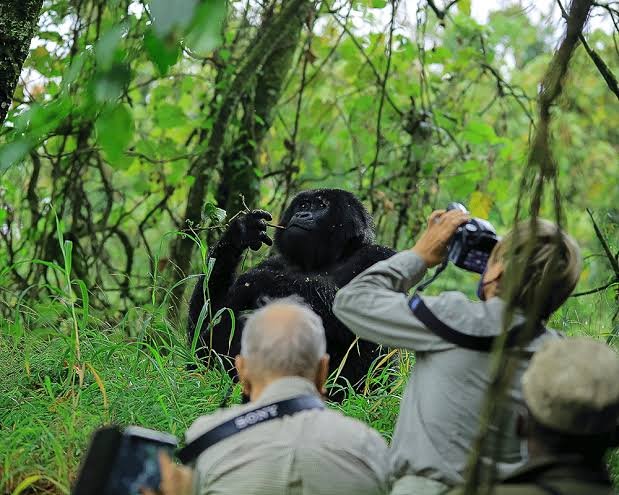
Rwanda Gorilla Trekking Cost Per Person. The gorilla permit for an international visitor costs US$1,500 per person, and that single fee is the biggest part of what you will pay to trek in Rwanda. Visit Rwanda lists the same figure of US$1,500 per person per day on its gorilla tracking page, and it entitles you to spend up to one hour with a habituated mountain gorilla family. Everything else, from the road transfer and the lodge to meals, a porter and tips, is added on top and depends on the trip you build.
That is why the clearest way to answer “how much does it cost per person?” is in two parts. The permit is fixed by the Rwanda Development Board (RDB) and is the same whichever operator you use. The rest of the cost varies with the number of days, the quality of the lodge, the size of your group and the season. In this guide you will see what the permit costs for each type of visitor, what else to budget, how group size changes your share of the vehicle, and where you can save.
If you want a personal quotation once you have read the guide, you can send your dates through our contact page or look at our full range of Rwanda gorilla trekking tours.
What This Cost Guide Covers
We begin with the permit fee and the categories of visitor, then look at the other costs on a typical tour, with a table you can use as a checklist. After that you will find worked examples for one, two and four travellers, notes on how tour length changes the price, the extras that add cost, ways to save and a section on whether the price is worth it. Where a figure comes from an official body such as RDB or Visit Rwanda, we link to it, so that you can confirm the current amount before you pay. Prices and promotional rates change, so treat this guide as a planning tool and check the official pages for your travel date. You can also read more about our team, or begin on our home page.
The Gorilla Permit Fee: Where the Money Goes
The permit is the first line of every gorilla trekking budget in Rwanda. RDB raised the price from US$750 to US$1,500 on 6 May 2017, as recorded in its notice on the increase of gorilla permit tariffs. The notice says the change aimed to strengthen conservation and to contribute more to the development of the communities living around Volcanoes National Park, and that the share of tourism revenue going to those communities rose from 5 percent to 10 percent. In other words, a large part of your cost per person is an investment in protecting the animals you have come to see.
The fee buys access to one of a limited number of daily places. Visit Rwanda says there are twelve fully habituated gorilla families in Volcanoes National Park, that only 96 permits are available each day and that each visit is limited to one hour. RDB’s booking page adds that a maximum of eight visitors can trek together. Because places are limited and prices are fixed, you cannot bargain the permit down. What you can do is choose the right tour around it, which is why our Rwanda gorilla permit page and our Volcanoes National Park guide are good places to start.
What the Permit Covers and What It Does Not
The permit is for the gorilla trek and the hour with the family. Accommodation, transport from Kigali, meals, a porter and tips are paid separately, and the permit is not a visa. A permit guide on volcanoesnationalpark.org, a Rwanda travel information site, says that most tour operators organise permits at no extra charge as long as you cover the money transfer or card surcharge, so ask your operator whether bank or card fees are added to your quotation. You can read that advice on its permit booking page.
Is the Permit Price the Same in Every Season?
The published international price is US$1,500 per person per day, but RDB’s booking portal warns that some reduced categories are promotional and do not apply from June to October 2026. Rates and conditions can change, so the safest habit is to open the official gorilla tracking page for your exact date. If you book with us, we check the category that applies to your nationality and residency before we prepare a quotation, and we tell you if the price differs from what you expected.
Gorilla Trekking Permit Cost Per Person by Visitor Category
Rwanda prices the gorilla permit by category of visitor, and the category is decided by your nationality and residency, not by the tour you choose. According to the RDB booking portal, foreign visitors pay US$1,500, foreign residents in Rwanda and African citizens are listed at US$500, and Rwandan citizens and East African citizens are listed at US$200. The same page adds a warning that these are promotional rates and are not applicable from June to October 2026. The permit guide on volcanoesnationalpark.org lists the same categories and notes that East African Community members pay US$200, other African citizens and foreign residents US$500, and non-African passport holders US$1,500.
| Visitor category | Permit price per person, per RDB portal |
|---|---|
| Foreign visitor | US$1,500 |
| Foreign resident in Rwanda | US$500 |
| African citizen | US$500 |
| Rwandan citizen | US$200 |
| East African citizen | US$200 |
Please read the note on the portal carefully, because lower categories are described as promotional and the portal states that they do not apply from June to October 2026. Since categories and conditions can change, confirm your own category on the official page before you budget.
Is There a Child or Student Rate for Gorilla Trekking?
The minimum age for gorilla tracking is 15 years, according to RDB, so younger children cannot trek at all. The sources we checked do not list a separate reduced gorilla permit for teenagers, so plan on the full category price for every trekker aged 15 and above, and ask RDB or your operator if you believe a special rate applies to you. Younger children can enjoy other activities around Musanze, such as lakes, caves and village visits, while the older members of the family trek.
Per Person Means Per Day and Per Trek
The permit is priced per person and per day, and it allows one visit of up to one hour. If you want to see gorillas on two different days, you need two permits. Most travellers book one trek, and use extra days for other activities that have their own permits, such as golden monkey tracking in Rwanda. If you are planning to see gorillas in more than one country, remember that each country charges its own fee, and read our overview of Uganda gorilla trekking or our Rwanda and Uganda gorilla safaris to compare the plans.
Beyond the Permit: The Other Costs Per Person
A permit alone does not get you to the gorillas, so a realistic budget adds the costs below. We have not put invented price tags on them, because vehicle rates, lodge rates and meal costs change by season and by supplier. Instead, the table shows how each item is normally priced, so that you can see why one quotation differs from another and what to ask about.
| Cost item | How it is normally charged | What changes the price |
|---|---|---|
| Gorilla permit | Per person, per trek | Your category and the date, per RDB |
| Vehicle and driver-guide | Per vehicle, per day, shared between travellers | Group size, days, vehicle type, fuel |
| Accommodation | Per person or per room, per night | Lodge standard, season, single or shared room |
| Meals | Per person, per meal or per day | Which meals are included, restaurant or lodge |
| Porter | Per trek, usually optional | Whether you want help with your bag |
| Tips | Discretionary | Service level and group size |
| Visa | Per person, if required | Nationality, and single or multiple entry |
| Insurance and flights | Per person | Provider, route and season |
Transport From Kigali to the Park
The park is about 104 to 105 kilometres from Kigali, a drive of two to three hours by 4×4 according to the Volcanoes National Park getting there guide. The guide also says that there is no public transport between Musanze and the park headquarters, and that rental cars with driver-guides are the preferred way to reach the park. That is why most visitors pay for a private vehicle, and why transport is a cost shared by everyone in the car. The more people who share, the lower the transport cost per person.
Accommodation and Meals
On a one-day trip you pay for no accommodation at all. On longer tours you sleep near the park or in Musanze, which Visit Rwanda describes on its Musanze page as a base for gorilla tracking at about 1,850 metres, with restaurants, ATMs, markets and craft shops. Lodge prices range widely, from simple town hotels to luxury lodges, so this is the line on your budget that you control most. Tell us your comfort level and your budget when you ask for a quotation.
Visa, Insurance and Tips
Rwanda’s visa rules depend on nationality. Visit Rwanda’s immigration and visas page says citizens of all countries can get a visa on arrival, that African Union, Commonwealth and La Francophonie members are listed as receiving a free visa for a 30-day visit, that East African Community citizens can stay visa-free for up to six months, and that fees for other nationalities must not exceed US$50 for a single entry visa. Check your own case on the immigration service’s visa on arrival page. Also budget for travel insurance, and for tips for the guides, the trackers, the porter and the driver, which are customary but not obligatory.
Worked Examples: What Group Size Does to Your Cost Per Person
The permit cost per person never changes with group size, but the shared costs do. The permit totals below use the US$1,500 international price and simple multiplication.
| Travellers | Permit cost per person | Total permit cost |
|---|---|---|
| 1 | US$1,500 | US$1,500 |
| 2 | US$1,500 | US$3,000 |
| 4 | US$1,500 | US$6,000 |
| 8 (the largest group size per family) | US$1,500 | US$12,000 |
Now consider the vehicle. The next example is an illustration only, not a price list: imagine that the private vehicle and driver-guide for your trek cost US$400 in total. A solo traveller carries the whole US$400, two travellers pay US$200 each, and four travellers pay US$100 each. The same logic applies to a shared room on a longer tour, where two people splitting a room pay half the room cost each. You can see how the per-person cost of everything except the permit falls as the group grows.
Solo Traveller, Couple, Family and Friends
A solo traveller pays the full share of the vehicle and any single-room supplement, so the total per person is highest. A couple shares one vehicle and normally one room, which lowers the per-person cost noticeably. A family with teenagers of 15 or above pays the permit for each trekker but shares the vehicle and rooms. A group of friends benefits most from sharing, although RDB limits each gorilla group to eight visitors, so parties larger than eight are split across families. Read the RDB tracking page for the maximum group size and other conditions.
Joining a Group to Reduce the Cost
Solo travellers can ask about sharing a vehicle with other guests on the same date, which reduces the transport share. That depends on other bookings, so it is not always available. Ask when you contact us through our contact page, and mention your flexibility on dates, because a flexible date can make it easier to find a shared trip. You can also compare options on our Rwanda safari tours page.
How Tour Length Changes the Cost Per Person
Because the permit is a fixed amount, the difference between a short tour and a long one is almost entirely the number of nights, meals and vehicle days. The gorilla permit is paid once, however many days you are away. A longer tour therefore makes the permit a smaller share of the total, but it makes the total itself larger.
One Day: The Lowest Total Cost
A 1 day Rwanda gorilla trekking trip has no accommodation cost, so the total is essentially the permit, one long day of private transport, and food. It is the lowest total price, but the day is demanding. The park travel guide says that visitors who overnight in Kigali have to start driving by 5am to reach the park headquarters by 7am, and it says that they can track gorillas and return the same day. If you do not mind the early start, this is the leanest way to see gorillas.
Two Days: A Balanced Price and Pace
The 2 days Rwanda gorilla trekking tour adds one night near the park, one more day of vehicle and driver time, and evening and breakfast meals. That raises the total, but it removes the pre-dawn drive and gives you a calm evening before the trek. For many travellers this is the best balance between cost and comfort, especially when two people share a room.
Three and Four Days: More Time, More Cost, More Value
A 3 days Rwanda gorilla safari leaves room for another activity such as golden monkey tracking, and a 4 days Rwanda gorilla safari can add a rest day, Kigali or another park. Each extra day adds accommodation, meals and vehicle time, plus the fee for any extra activity. In return you spread the fixed permit cost over a richer trip and get a buffer if you are tired from your flights. The best length for your budget depends on what else you want to see, and we can price two or three options side by side when you ask.
Why Prices Differ Between Quotations
If two operators quote different totals for the same tour length, the difference usually comes from the lodge, the vehicle, the meal plan, the number of guests sharing, and sometimes card or bank charges. Ask each company for a line-by-line quotation, and compare the permit category, the nights, the accommodation level and what is excluded. A very low price should prompt questions about what has been left out.
Extra Activities and What They Add Per Person
Most travellers add at least one activity to their gorilla trek, and each has its own price. The most common is golden monkey tracking. RDB’s golden monkey tracking page lists US$100 for foreign adults, US$65 for East African citizens and foreign residents in Rwanda (adult), and RWF 4,000 for Rwandan adults, with lower student and child rates. It sets a minimum age of 12 and a maximum of sixteen visitors per group, and it says visitors report at 7am. That means it takes a separate day from the gorilla trek, so a golden monkey add-on also adds a night and a day of vehicle time. Our golden monkey tracking in Rwanda page explains how to include it.
The Dian Fossey Hike and Other Activities
History lovers often ask about the Dian Fossey hike, which relates to the Karisoke Research Center that Dian Fossey founded on 24 September 1967, as described by the Dian Fossey Gorilla Fund. Other activities near the park listed by Visit Rwanda include the Musanze caves, the crater lake on Bisoke, the Buhanga Eco-Park and canoeing, hiking and mountain biking. We do not quote a price for these here, because activity fees change, so ask for the current fee when you request your quotation.
Kigali, Nyungwe and Akagera
Adding the capital or another national park raises the cost through extra nights, transport and park fees, but it also broadens your trip. See our Kigali city tour, Nyungwe National Park and Akagera National Park pages for ideas. RDB’s 2017 tariff announcement listed a 30 percent reduction on the gorilla permit for visitors who spend three or more days at other national parks such as Nyungwe and Akagera, and a 15 percent discount for conference visitors who travel before or after their event. Those terms may have changed since the announcement, so put the question to RDB or to your operator before you assume that any discount applies to your trip.
Exclusive Gorilla Family Bookings
The same announcement introduced an exclusive option to book an entire gorilla family for US$15,000 with a personalised guide service. It is a special product for people who want a private experience, and its availability and price should be confirmed directly with RDB.
Seven Ways to Lower Your Cost Per Person
You cannot reduce the permit for your category, but you can control almost everything else. The first way is to travel with others, because a shared vehicle and a shared room cut the per-person cost of both. The second is to choose the tour length carefully. A one-day or two-day trip keeps accommodation and meals low, while a longer trip raises the total. The third is to select a mid-range lodge rather than a luxury one, since the lodge can be the largest cost after the permit.
The fourth is to avoid unnecessary transfers and extras. Decide which activities matter to you and skip the rest. The fifth is to confirm your permit category, because a resident or citizen may pay a lower fee than an international visitor, as the RDB portal shows on its gorilla tracking page. Remember that its lower categories are marked as promotional and not applicable from June to October 2026. The sixth is to ask about the RDB discounts that apply to longer stays in other parks, as mentioned above. The seventh is to book early. The permit guide on volcanoesnationalpark.org recommends reserving at least six months ahead, and early booking gives you a better choice of dates and lodges.
False Savings to Avoid
Not every saving is wise. A very cheap quotation may leave out the permit, meals or park transfers, so ask what is included. Skipping travel insurance, or using worn boots and thin rain gear, can cost much more than you save. Choosing the cheapest vehicle can also mean a long, uncomfortable drive on a day that already asks a lot of you. If you are on a tight budget, the better route is usually a shorter tour with a reliable operator, not a longer tour with cheaper terms.
Timing Your Trek to Manage Costs
Permit prices do not follow the weather, but lodge and transport prices may. The seasons guide on volcanoesnationalpark.org describes June to September and December to February as dry seasons and March to May and October to November as rainy seasons. Because the dry seasons are popular, book early if you want them, and ask us about lodge rates for your dates if you are flexible. See the full best time to go gorilla trekking guide before you fix your plan, and send us your preferred window through our booking page.
Is a Rwanda Gorilla Trek Worth the Price?
For most visitors, the answer is yes, and the reason is what the money does. RDB says the 2017 increase was designed to strengthen conservation and to give more to the communities around Volcanoes National Park, and it raised the community share of tourism revenue from 5 percent to 10 percent. Your permit therefore supports rangers, trackers and local development as well as your own hour with the family. The Dian Fossey Gorilla Fund’s Karisoke Research Center page explains that its trackers protect about half of Rwanda’s mountain gorilla families every day, and that its work includes removing snares and preventing poaching, which shows the conservation effort behind gorilla tourism.
There is also the quality of the experience. Group sizes are limited to eight, visits last one hour, and Visit Rwanda calls tracking here safe and relatively accessible. With only 96 permits available each day, the forest never feels crowded. These limits are part of what you pay for.
How Rwanda Compares With Uganda on Cost
Uganda is the other main destination for mountain gorillas, and it sets its own permit price through the Uganda Wildlife Authority (UWA). We do not quote UWA’s price here, because its tariff is published for set periods and you should check the current figure on the UWA gorilla tracking page and its tariff documents. What we can say is that the choice is not only about the permit. Rwanda is compact, and the park is about two to three hours from Kigali, so you spend less on transport and time and can see gorillas on a short trip. UWA says treks in Uganda may last between 2 and 7 hours, while Visit Rwanda describes Rwandan hikes of 30 minutes to four hours, so the effort and the time you need can differ. If cost is the deciding factor, ask us to price both, using our Rwanda and Uganda gorilla safaris and Uganda gorilla trekking pages as a starting point.
What You Get for Your Money
The permit gives you a guided walk and up to an hour with a habituated family, led by rangers who know the group. The tour price adds a private vehicle, a driver-guide, lodging and meals, and a team that handles your booking. If you compare the total with the memory you take home, most travellers find that the cost per person is justified. Read more about our approach on our about page.
How to Get an Accurate Cost Per Person for Your Trip
A precise price needs a few details from you. Tell us your nationality and residency, so that we can apply the right permit category. Give us your preferred trek date, or a range of dates, the number of travellers and their ages, and the number of days you want. Say whether you want to sleep near the park or in Musanze, and what standard of lodge you prefer. Mention any extras, such as golden monkey tracking or a Kigali visit, and tell us about any medical or mobility needs. With those details we can prepare a line-by-line quotation, and you can compare it with others.
You can send the details through our contact page or start a request on our booking page. For inspiration before you decide, browse our Rwanda gorilla trekking tours and read our travel ideas on the blog.
Frequently Asked Questions About Gorilla Trekking Cost in Rwanda
How Much Does Gorilla Trekking in Rwanda Cost Per Person?
The permit alone is US$1,500 per person for an international visitor, according to Visit Rwanda and RDB. Transport, accommodation, meals, a porter and tips are extra, and the total depends on your tour length and group size.
Is the Gorilla Permit Cheaper for East Africans and Residents?
The RDB portal lists US$200 for Rwandan and East African citizens and US$500 for foreign residents in Rwanda and African citizens, but it warns that these promotional rates are not applicable from June to October 2026. Check the current official page for your date.
Does the Permit Include a Visa, Transport or Accommodation?
No. The permit is for the trek and the hour with the family. Your visa, transport, accommodation and meals are separate.
Are There Discounts on Rwanda Gorilla Permits?
RDB’s 2017 announcement listed a 30 percent discount for visitors who spend three or more days at other national parks and a 15 percent discount for conference visitors. Confirm the current terms before you plan around them.
Book Your Gorilla Trek and Know Your Cost Before You Pay
The cost per person for Rwanda gorilla trekking begins with a US$1,500 permit for international visitors and grows with the days, lodge, vehicle and extras you choose. The clearest way to control it is to fix your date and category first, choose a tour length that fits your energy and budget, and ask for a written quotation. If you are ready to plan, send your dates through our contact page, or explore our 1 day and 2 days options, and start on our home page.