- LET'S PLAN YOUR SAFARI
- +256 200 921 002
- +256 793 194 703
- info@rwandagorillatrekkingtours.com

Choosing Gorilla Trek in Uganda than Rwanda
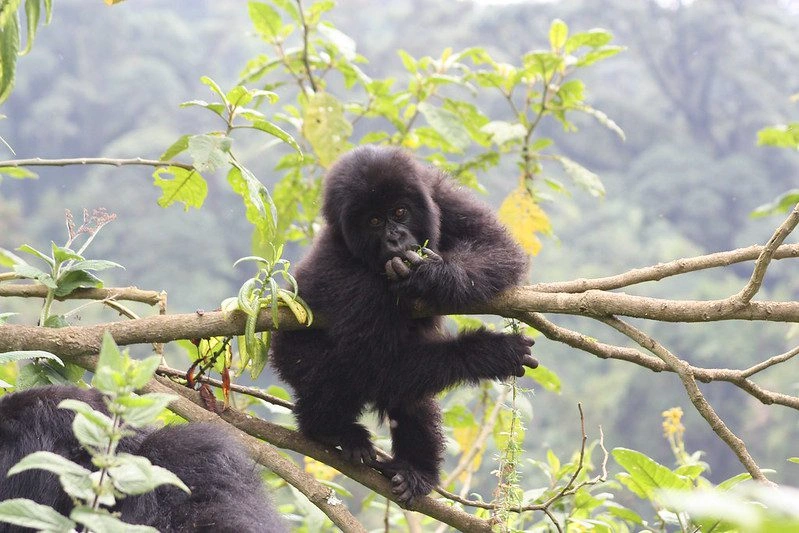
Choosing Gorilla Trek in Uganda than Rwanda. Uganda and Rwanda protect the same great prize, the endangered mountain gorilla, and both limit each visit to one hour with a habituated family. That shared foundation is why so many travellers find the choice between them hard. Rwanda is compact, polished and close to its capital. Uganda is larger, wilder and usually lower in price. If your priorities are a lower gorilla permit price, a choice of forest sectors, and the chance to add chimpanzees and classic safari parks to the same trip, Uganda is often the stronger choice. If your priority is a short trip from Kigali with the least travel time, Rwanda may win. This guide explains both sides so that you can decide with facts rather than guesses.
We write this from a Rwanda-focused website, and we say so plainly, because a fair comparison should not hide where it stands. Our team at Rwanda Gorilla Trekking Tours knows Rwanda’s Volcanoes National Park well, and our page on Uganda gorilla trekking explains the alternative. Where Uganda is better for a particular traveller, we tell you so, and where Rwanda is better, we explain that too.
What This Comparison Covers
We compare the two countries on permit price, the forests and the number of gorillas, trek length and difficulty, the sectors you can choose from, what else you can see on the same trip, logistics and visas, and the situations in which Rwanda is the better choice. We also give a worked budget example for a couple, booking tips, common mistakes and answers to frequent questions.
Wherever a fact comes from an official body, we link to it so that you can check the current figure. According to the Uganda Wildlife Authority, Bwindi Impenetrable National Park is home to about 459 mountain gorillas, which UWA describes as almost half of the world’s population, and it offers gorilla tracking in four sectors: Buhoma, Ruhija, Rushaga and Nkuringo. UWA also manages a smaller gorilla destination at Mgahinga. In Rwanda, Visit Rwanda describes twelve habituated gorilla families in Volcanoes National Park, 96 permits a day and a permit price of US$1,500 for foreign visitors.
If you would like help comparing the two on your own dates, our Rwanda and Uganda gorilla safaris page shows how both countries can be planned together, and you can send your questions through our contact page.
Gorilla Permit Price: Why Uganda Costs Less Than Rwanda
The permit is the biggest single line in any gorilla budget, and it is where the two countries differ most. Rwanda’s tourism board, Visit Rwanda, lists the foreign-visitor permit at US$1,500 per person. Rwanda Development Board’s booking portal also shows lower categories of US$500 and US$200, but these are marked as promotional and are not applicable from June to October 2026, so US$1,500 remains the normal planning figure for a foreign visitor. RDB explains the reasoning behind the tariff in its notice on the increase of gorilla permit tariffs, and our own Rwanda gorilla permit page explains how we arrange permits for guests.
Uganda’s price is set by the Uganda Wildlife Authority, and the UWA rates page publishes the tariff. Under the schedule that ran from July 2024 to June 2026, a gorilla tracking permit cost US$800 for a foreign non-resident, US$700 for a foreign resident and UGX 300,000 for an East African citizen. That schedule has reached its end date, so treat US$800 as the most recent published price and confirm the current figure with UWA or your operator before you commit. The same tariff also lists a separate gorilla habituation experience, priced higher than the standard permit.
What the Difference Means in Real Money
On the published figures, a foreign non-resident saves about US$700 per permit by tracking in Uganda (US$1,500 minus US$800). The saving grows quickly with group size and with the number of treks:
| Trip | Rwanda (US$1,500 per permit) | Uganda (US$800 per permit, confirm current) | Difference |
|---|---|---|---|
| One traveller, one trek | US$1,500 | US$800 | US$700 |
| Couple, one trek each | US$3,000 | US$1,600 | US$1,400 |
| Family of four, one trek each | US$6,000 | US$3,200 | US$2,800 |
| One traveller, two treks | US$3,000 | US$1,600 | US$1,400 |
Those savings can pay for several nights of comfortable lodging, a private driver-guide or an extra national park. For many budget-conscious travellers, the gap is the deciding factor, and it is the main reason Uganda deserves a place on your shortlist even if you first searched for Rwanda. Our Rwanda gorilla trekking tours page shows what a Rwanda package includes, and you can use the booking page to send your dates and ask about Uganda as well, so that you can compare the two side by side.
Permit Price Is Not the Whole Budget
A fair comparison has to admit that the permit is only part of the cost. Uganda’s gorilla forests are further from Kampala than Rwanda’s are from Kigali, so road transport and, in some itineraries, an internal flight can take back some of the saving. Accommodation ranges from simple to high-end in both countries. Work through those extras with your operator, because the permit saving still tends to matter most for groups, families and anyone who wants to track gorillas more than once.
Two Gorilla Forests, Four Sectors and About Half the World’s Mountain Gorillas
Uganda’s strongest argument after price is the scale of what it protects. According to the Uganda Wildlife Authority, Bwindi Impenetrable National Park is home to roughly 459 mountain gorillas, which UWA describes as almost half of the world’s population. The park rises and falls across steep, forested ridges, from about 1,160 metres to 2,607 metres above sea level, and gorilla tracking is organised across four sectors: Buhoma, Ruhija, Rushaga and Nkuringo. Each sector has its own trailheads, its own habituated gorilla groups and its own local lodges.
Uganda has a second gorilla destination as well. Mgahinga Gorilla National Park, in the far south-west, has one habituated gorilla group and offers about eight permits a day. Mgahinga is part of the wider Virunga volcano landscape that Uganda shares with Rwanda’s Volcanoes National Park, so travellers who choose Mgahinga are tracking gorillas from the same mountain population that Rwanda’s visitors see, just on the Ugandan side of the border.
How Rwanda’s Gorilla Offer Compares
Rwanda concentrates its gorilla tourism in a single park. Visit Rwanda describes twelve habituated gorilla families in Volcanoes National Park, and the tracking system allows 96 permits a day, with groups of no more than eight visitors and one hour with the gorillas once you find them. A summary of the Rwanda gorilla trekking rules sets out what visitors must do, and the system is clearly well organised. Our own page on Volcanoes National Park describes the park and its surroundings, and travellers with an interest in gorilla history can ask about our Dian Fossey hike.
The practical difference is choice. In Rwanda you have one park headquarters at Kinigi, one type of terrain and one road to the trailheads. In Uganda you choose between different sectors, each with a different landscape, a different set of gorilla groups and a different base town or lodge. That variety is valuable in two ways. First, it lets you match the sector to your fitness level and your route, which the next sections explain. Second, it spreads visitors across a larger forest, which suits people who want the sense of tracking in a big, wild place rather than a single well-managed corridor.
Where to Stay Around the Ugandan Gorilla Forests
Because the forest is large, your choice of lodge shapes your morning. If your route brings you in through the south-west border town of Kisoro, the Pick and Transfer Safaris page for Ikoro Hotel in Kisoro is one accommodation option to look at. The same company’s article on what to do after a gorilla tour in Bwindi is a useful read for planning the days that follow your trek. We have linked these pages by title, so please read them yourself and confirm current details before you book. Ask your operator which sector each lodge serves, because the closest lodge to your trailhead can save a good deal of early-morning driving.
Trek Length and Difficulty: Uganda’s Longer Hikes Versus Rwanda’s Shorter Ones
The physical side of gorilla tracking is where careful planning matters most, because the two countries are not identical. Under the UWA gorilla tracking guidelines, a Ugandan trek can last anywhere from about two to seven hours, depending on where the gorilla group spent the night and how quickly the trackers reach it. UWA’s older Bwindi visitor factsheet describes the range more loosely, as anything from a few hours to a whole day, so it is safest to prepare for a demanding morning. Bwindi’s terrain is steep, with the park spanning roughly 1,160 to 2,607 metres above sea level.
Rwanda’s treks are generally described as shorter. Visit Rwanda cites a range of roughly 30 minutes to four hours on the slopes of the Virunga volcanoes, at altitudes of about 2,500 to 4,000 metres. The air is thinner and the mud can be heavy, but the average walk is shorter. For travellers with limited time or limited stamina, that can be a real advantage, and our 1 day Rwanda gorilla trekking and 2 days Rwanda gorilla trekking tour pages show how compact a Rwanda itinerary can be.
Is the Uganda Trek Too Hard for You?
Most reasonably active travellers manage a Ugandan gorilla trek, and there are several ways to make it easier. The minimum age for tracking is 15 in both countries, so families with older teenagers can take part, but younger children cannot. Beyond age, the main levers are these:
- Choose the sector with care. Sectors differ in terrain and in the gorilla groups on offer, and it helps to tell your operator and the rangers about your fitness level. Rangers make the final allocation of visitors to gorilla groups at the morning briefing, and gorilla groups move, so no particular trek can be guaranteed.
- Hire a porter. Porters carry your daypack and can steady you on slippery slopes, and the fee typically supports local people. Ask your operator to arrange one when you book.
- Wear proper gear. Waterproof hiking boots, long trousers, gaiters, gloves for gripping vegetation, a rain jacket and a walking stick make the hike more comfortable in either country.
- Train beforehand. A few weeks of hill walking or stair climbing helps far more than any equipment.
If you are travelling with someone who cannot manage a long hike, or with a group that has mixed fitness levels, raise that when you first speak to your operator. You can read about our team on the about page and then tell us about your group, so that we can help you weigh whether Uganda suits everyone or whether a shorter Rwanda trek would be kinder on the knees.
A Longer Walk Often Means a More Memorable Encounter
For some travellers, the effort is part of Uganda’s appeal. A long walk through hanging vines, tree ferns and steep valleys gives you time to feel the forest before you meet the gorillas, and when you finally see the group resting in the undergrowth, the moment lands harder. That is a personal judgement rather than a rule, and plenty of visitors in Rwanda are just as moved by their hour with the gorillas. What matters is that you know the effort involved in each country and pick the one that matches your body and your expectations.
How to Choose Between Buhoma, Ruhija, Rushaga, Nkuringo and Mgahinga
One of the pleasures of tracking in Uganda is that you get to choose your entry point. The Uganda Wildlife Authority’s page on Bwindi Impenetrable National Park lists four tracking sectors, and Mgahinga Gorilla National Park adds a fifth option. The table below summarises how to think about each one. Because group allocations, trail conditions and permit availability change, use it as a planning guide and confirm the details with your operator.
| Sector | Where it fits in a trip | What to ask your operator |
|---|---|---|
| Buhoma | Bwindi’s northern sector, often chosen by travellers linking gorillas with Queen Elizabeth National Park | Which gorilla groups are available for your dates and how far the lodge is from the trailhead |
| Ruhija | Another Bwindi sector; whether it fits depends on your route and lodge | Terrain, likely trek length and which lodge is closest |
| Rushaga | Bwindi’s southern sector, a natural fit for routes that enter or leave Uganda through the south-west | Which gorilla groups are available for your dates |
| Nkuringo | Another southern sector; ask about the terrain before you commit | How steep the trek is likely to be and whether a porter is advised |
| Mgahinga | Uganda’s smaller park, with one habituated group and about eight permits a day | Advance availability, because permits are few |
Matching the Sector to Your Route
The simplest way to choose is to work backwards from the rest of your trip. If you are pairing gorillas with Queen Elizabeth National Park or Kibale, a sector on the northern side of the park is often the natural fit. If you are arriving from Rwanda through the south-west border area, or leaving Uganda that way, then a southern sector or Mgahinga can reduce the driving on either side of the trek. Our page on Uganda gorilla trekking is a good starting point, and the Rwanda and Uganda gorilla safaris page shows how a Rwanda trek and a Uganda trek can be joined into one journey.
Remember that a permit is issued for a specific date and a specific sector. Book the sector and the lodge together, and do not assume that you can switch sectors freely once permits have been issued. If your dates are fixed, especially in the busiest months, contact your operator early, because the number of permits per day is limited in every sector.
Choosing Mgahinga When You Want a Smaller, Quieter Experience
Mgahinga is the smallest of Uganda’s gorilla options, and that is exactly why some travellers choose it. With one habituated group and about eight permits a day, it is a low-volume experience, and it sits in the same volcanic landscape that Rwanda’s Volcanoes National Park protects. The trade-off is availability: with so few permits, it can fill quickly, so book early. If you stay in Kisoro, the Pick and Transfer Safaris page on Ikoro Hotel in Kisoro gives you one accommodation idea to explore, and you can talk through the rest of the route with us through the contact page.
Beyond the Gorillas: Why Uganda Makes a Richer Safari Circuit
This is the point where Uganda pulls clearly ahead for travellers who want more than a single day of wildlife. Gorilla tracking is the headline, but Uganda packs chimpanzees, big game, boat safaris, waterfalls and lakes into a country small enough to cover in a week or two. The sections below walk through the most popular add-ons, and our Uganda gorilla trekking page is the place to start if you want to see how the gorilla forests fit into a wider itinerary.
Chimpanzee Tracking in Kibale National Park
Kibale National Park is the natural partner for a gorilla trip. UWA says the forest holds more than 1,500 chimpanzees, with four habituated communities open to visitors, and it is home to 13 primate species in total. Chimpanzee tracking typically takes between two and five hours, and UWA reports a success rate above 90 percent. Kibale lies about 326 kilometres from Kampala, which is roughly a six-hour drive, so many itineraries place it on the route between the capital and the gorilla forests rather than treating it as a separate trip.
Rwanda also offers primate experiences, including chimpanzees in Nyungwe Forest, so this is not a case of one country having primates and the other having none. The advantage in Uganda is that a Kibale and Bwindi pairing sits comfortably on one road route, and the lower gorilla permit price leaves more of the budget for the chimpanzee permit.
Queen Elizabeth National Park: Big Game and the Kazinga Channel
Between Kibale and the gorilla forests, Queen Elizabeth National Park gives you a full savannah safari. UWA lists the park at 1,978 square kilometres, with more than 95 mammal species and more than 600 bird species. The Kazinga Channel boat cruise brings hippos, buffalo, elephants and waterbirds to the water’s edge, and the Ishasha sector is known for its tree-climbing lions. For travellers who want a game drive, a boat trip and gorillas in one itinerary, this stretch of Uganda is hard to match.
Murchison Falls and Northern Uganda
If you have more time, Murchison Falls National Park adds a classic Nile safari to the trip, with a river cruise below the falls and game drives on the northern bank. It sits far from the gorilla forests, so it works best in a longer itinerary, and you should ask your operator how many days to allow for the driving.
What Rwanda Offers Beyond the Gorillas
A fair comparison should also credit Rwanda’s other attractions, and our website covers them. Nyungwe National Park offers forest walking and primates, Akagera National Park offers savannah wildlife, and golden monkey tracking in Rwanda can be added beside the gorillas in Volcanoes National Park. Our Rwanda safari tours page shows how these fit together. The Uganda circuit gives you more choice over a longer route, while the Rwanda circuit is compact and easy to cover in a few days.
Starting in Kigali and Finishing in Entebbe
Many travellers want the best of both countries in a single trip. Pick and Transfer Safaris addresses that idea in its article on whether you can begin your tour from Kigali Airport and end in Entebbe Airport, which is worth reading if you are considering a one-way route between the two countries. Confirm the current details with your operator before you plan around it.
Getting There: Logistics, Border Crossings and Transfers
Good logistics are the one place where Rwanda has a clear edge. Volcanoes National Park is roughly 104 to 105 kilometres from Kigali, about two to three hours by road, and the gorilla briefing at Kinigi starts around 7 am. That makes a short trip feasible from the capital, and you can add a Kigali city tour before or after the trek.
Uganda asks for more travel time. Kibale is around 326 kilometres from Kampala, about six hours, and the gorilla forests are further still. Most Uganda itineraries therefore either spend a day on the road, or use a domestic flight where one is offered, or approach the gorilla forests from Rwanda. If you arrive in Kigali, private operators generally estimate the drive from Kigali to Kabale at about 140 kilometres and three to four hours, and treat the Gatuna (Katuna) crossing as roughly 80 kilometres and two hours from the Rwandan capital. Cyanika, an alternative crossing near the south-west, is usually quoted at about 119 kilometres and around three hours via Musanze. These are operator estimates rather than official timings, so ask your driver to confirm the route, the border hours and the current road conditions before you fix a schedule.
Crossing by road with a rental or private vehicle usually adds paperwork, such as a COMESA Yellow Card for third-party insurance, which operators quote at about US$40 to US$50 for 14 days. Ask your operator whether a guided vehicle with the paperwork already arranged would be simpler. The Pick and Transfer Safaris website may also help you compare transfer and tour ideas for the Ugandan side.
Uganda Visa Rules for Gorilla Travellers
Uganda’s immigration authority now requires visa-prone travellers to apply online and does not issue visas on arrival to them. The tourist visa page lists a single-entry tourist visa at US$50, and it is wise to apply at least 10 days before you travel. If you plan to visit Kenya or Rwanda on the same trip, the East Africa Tourist Visa costs US$100 and covers Uganda, Kenya and Rwanda; the first entry must be into the country where you applied. A yellow fever vaccination certificate is required.
Rwanda Visa Rules for Comparison
Rwanda is easier on arrival. Visit Rwanda’s immigration and visa page explains that visitors can obtain a visa on arrival, that citizens of East African Community countries can stay up to six months without a visa, and that the fee is at most US$50. The Rwandan Directorate General of Immigration and Emigration lists visas issued under special arrangement, including a free 30-day stay for citizens of African Union, Commonwealth and Francophonie member states.
Visa rules change, and your nationality decides which category applies to you. Confirm them on the official sites above, or send your nationality and dates through our booking page, before you book flights.
When Rwanda Is the Better Choice
Choosing Uganda over Rwanda makes sense for many travellers, but it is not the right answer for everyone, and a good comparison should say so. Rwanda is likely to suit you better in the following situations:
- You have only two or three days. Volcanoes National Park is about two to three hours from Kigali by road, so a quick gorilla trip is realistic. Our 1 day Rwanda gorilla trekking and 2 days Rwanda gorilla trekking tour pages show what that looks like. In Uganda, the travel time to the gorilla forests eats into a short schedule.
- You want a shorter hike. Rwanda’s treks are described as ranging from about 30 minutes to four hours, whereas Uganda’s can run up to seven hours. Travellers with limited stamina may prefer Rwanda’s range.
- You want a compact, tightly organised experience. Rwanda’s single-park system, with twelve habituated families and a daily cap of 96 permits, is easy to plan around and easy to explain.
- Budget is not your main constraint. If you are comfortable paying the higher permit price for a fast, polished visit, Rwanda’s convenience can justify it.
- You want a few extra days in one country. A 3 days Rwanda gorilla safari or a 4 days Rwanda gorilla safari leaves room for extra activities without long drives.
- You are already in Kigali for other reasons. A meeting, a conference or a Rwanda-focused holiday makes the Kigali to Volcanoes leg a natural extension.
Rwanda’s arrival experience also benefits from simpler visa rules for many nationalities, as covered above, which can help if you are booking at short notice. You can browse everything we offer for Rwanda on our Rwanda gorilla trekking tours page.
A Fair Summary of the Trade-Offs
In short, Rwanda trades price for convenience, while Uganda trades convenience for price and variety. Rwanda costs more per permit, but it saves time and often shortens the hiking. Uganda costs less per permit, offers four Bwindi sectors and Mgahinga, and connects easily with chimpanzees and savannah parks, but it asks you to accept longer travel days. If you can spare a week or more, Uganda gives you more to combine with the gorillas and a lower permit cost to work with. If you can spare only a couple of days, Rwanda will probably be the more practical answer.
There is also a third option for travellers who cannot decide. Some itineraries cross the border and track gorillas in both countries, which lets you compare them yourself. That is an expensive route because you pay for two permits, but it can be sensible for enthusiasts who have the time and the budget. Our Rwanda and Uganda gorilla safaris page covers that idea, and your operator can tell you whether permit availability and the border logistics make it workable for your dates.
A Worked Budget Example for a Couple
To see how the two options compare, take a couple planning one gorilla trek each. On the published permit figures, Rwanda’s permits come to US$3,000 (2 x US$1,500). In Uganda, at the previous published price of US$800, the permits come to US$1,600 (2 x US$800), a difference of US$1,400 before any other cost is counted. That US$1,400 is a planning figure, not a promise, because the current Ugandan price must be confirmed and because the rest of the trip will not cost the same in each country.
The other cost lines to compare with your operator are:
- Ground transport. Uganda’s longer distances mean more driving days, while Rwanda’s shorter transfer keeps this line small.
- Accommodation. Both countries have lodges at several price levels near the gorilla parks, so compare like with like.
- Extra activities. Uganda’s add-ons, such as chimpanzee tracking or a Kazinga Channel cruise, come with their own fees, and you should ask for them to be itemised. In Rwanda, a golden monkey permit is one example of an add-on.
- Visas and insurance. Include visa fees, any border vehicle paperwork and travel insurance that covers a trek.
- Tips and porter fees. Small amounts, but worth budgeting for in advance.
Ask for a written, itemised quote that names the permit price, the sector or park, the dates and what is included, then compare quotes from more than one operator. You can start a Rwanda quote on our booking page, and our Rwanda gorilla trekking tours page shows what a package can include.
Booking Tips: How to Secure Your Gorilla Permit
Permits are limited, so booking early is the single best piece of advice for either country. A few more habits help:
- Book the permit before you book non-refundable flights. Confirm your permit dates with your operator, then buy flights that fit them.
- Use a licensed operator. In Uganda, UWA can issue permits through its own reservations team at reservations@wildlife.go.ug, and reputable operators book on your behalf. In Rwanda, permits are applied for on the RDB booking portal or through an operator. Whoever you use, ask for a written confirmation naming the park and the date.
- Read the refund and rescheduling rules. Gorilla permits usually have strict change conditions, so find out what happens if you fall ill or your flights change.
- Check which tariff period applies. UWA’s published schedule ran from July 2024 to June 2026, so make sure the price on your quote matches the period in which you will actually track.
- Buy travel insurance. Choose a policy that covers medical care and cancellation, since a trek in remote terrain carries real risk.
For more planning ideas, read the tips on our blog, or send your dates and group size through the contact page.
How to Prepare for a Gorilla Trek in Uganda or Rwanda
A little preparation makes the day far more enjoyable. Pack waterproof hiking boots, long trousers and long sleeves for protection from nettles and insects, a rain jacket, gloves, a daypack, plenty of water and a camera that works in low light. Follow your guide’s instructions on how close to stand to the gorillas; UWA’s gorilla tracking guidelines set out the rules for Uganda, and your briefing will repeat them. Anyone who is unwell with a contagious illness should tell the rangers, because gorillas are vulnerable to human infections. Keep your voice low, avoid sudden movements and let the gorillas set the pace of the encounter.
Common Mistakes to Avoid
Several avoidable errors trip up first-time gorilla travellers:
- Comparing permit prices without checking the tariff period. A price from an old schedule can mislead you, so always confirm the current figure.
- Booking too late. Permits are limited in both countries, and popular dates fill early.
- Underestimating the hike. Prepare for a long, steep morning in Uganda even if you hope for a short one.
- Ignoring the road time. A cheaper permit does not help if you have not left enough days for the drives.
- Skipping the visa research. Uganda requires most visa-prone travellers to apply online in advance, so do not wait until you land.
- Expecting a guarantee. Trackers follow habituated groups, but wild animals move, and no operator can promise a particular sighting or trek length.
Frequently Asked Questions: Gorilla Trekking in Uganda or Rwanda
Is gorilla trekking cheaper in Uganda than in Rwanda?
On published figures, yes. Rwanda’s foreign-visitor permit is US$1,500, while Uganda’s most recent published price for a foreign non-resident is US$800. Confirm the current Ugandan tariff with UWA or your operator before you book.
Which country has the easier trek?
Rwanda’s treks are described as shorter, at roughly 30 minutes to four hours, while Uganda’s can range from about two to seven hours. Neither is guaranteed, because the length depends on where the gorillas are that morning.
Can I track gorillas in both countries?
Yes. You need a separate permit in each country, and the total cost is higher, but some travellers do it to compare the two experiences. See our Rwanda and Uganda gorilla safaris page for ideas.
What is the minimum age for gorilla tracking?
The minimum age is 15 in both Uganda and Rwanda.
How long do you spend with the gorillas?
Both countries limit each visit to one hour once the group is found, with small groups of at most eight visitors. Uganda also lists a separate gorilla habituation experience at a higher price, for travellers who want a longer encounter.
Do I need a visa for each country?
It depends on your nationality. Uganda requires most visa-prone travellers to apply online in advance, while Rwanda offers a visa on arrival to many visitors. The East Africa Tourist Visa costs US$100 and covers Uganda, Kenya and Rwanda, provided your first entry is into the country where you applied.
Conclusion: Which Should You Choose?
Choose Uganda if you want a lower permit price, a choice of sectors, the chance to add chimpanzees and classic safari parks, and a wilder, more varied trip. Choose Rwanda if you have very little time, want a shorter hike, or prefer a compact and tightly organised visit from Kigali. Either way, you will be sharing an hour with mountain gorillas, which is worth the planning.
If you are leaning towards Uganda, read our page on Uganda gorilla trekking, then send your dates and group size through the contact page or the booking page. You can also learn more about our team or start again from the Rwanda Gorilla Trekking Tours home page.