- LET'S PLAN YOUR SAFARI
- +256 200 921 002
- +256 793 194 703
- info@rwandagorillatrekkingtours.com

Can I Do Gorilla Trekking in Rwanda in 2 Days?
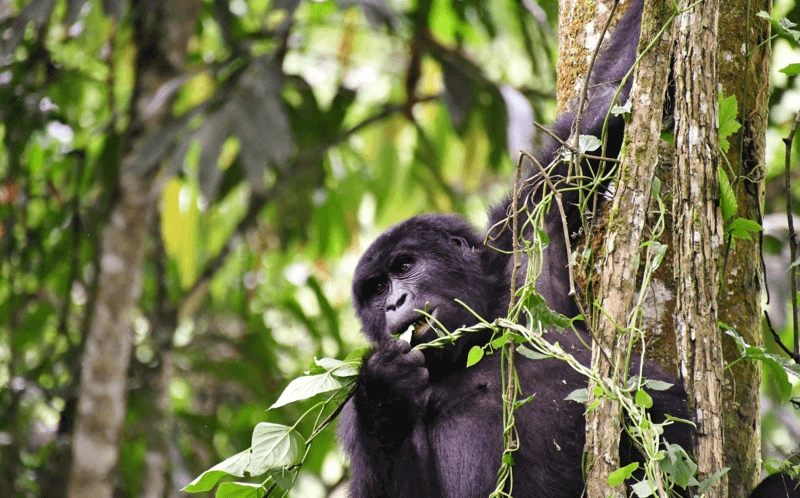
Can I Do Gorilla Trekking in Rwanda in 2 Days? Yes, you can do gorilla trekking in Rwanda in 2 days. You arrive in Kigali, drive north to the volcano region, sleep close to Volcanoes National Park, trek to a habituated mountain gorilla family the next morning, spend up to one hour with them and return to Kigali in the afternoon. It is one of the quickest ways to see wild gorillas, and it works because the park is close to the capital.
The main facts support this. A Volcanoes National Park travel guide puts the park about 104 to 105 kilometres from Kigali and estimates the drive at two to three hours by 4×4, and it notes that visitors can even track gorillas and return to Kigali on the same day. You can read the numbers in its getting there guide. If a day trip is possible, a two-day plan with a night near the park is comfortable.
At Rwanda Gorilla Trekking Tours we run this itinerary as our 2 days Rwanda gorilla trekking tour, and we also organise shorter and longer options on our page for Rwanda gorilla trekking tours.
What This Guide Answers
This article explains why two days is enough, shows a realistic timeline, lists what can go wrong and how to prepare, and sets out the permit price and other costs. It also helps you decide whether two days suits you or whether a shorter or longer trip would be better. Where a fact comes from an official source, such as the Rwanda Development Board (RDB) or Visit Rwanda, we link to it so that you can confirm the latest details. If you would like a plan for your dates, send us a message through our contact page or visit our home page.
Why Two Days Is Enough for Gorilla Trekking in Rwanda
Three things make a two-day gorilla trek practical. The first is distance. The park is roughly 104 to 105 kilometres from Kigali, whether you leave from the city centre or the airport, so the road takes about two to three hours by 4×4 according to the park guide. The second is the way the day is organised. Visit Rwanda says that visitors gather at the park headquarters in Kinigi at 7am, where they are briefed and allocated to a gorilla family according to fitness. The walk then takes anything from 30 minutes to four hours, and you spend up to one hour with the gorillas. The third is that everything happens in one small area, so you do not lose time moving between regions.
The Park Is Close to Kigali
The journey runs from Kigali to Musanze, the main town near the park. Visit Rwanda’s Musanze page describes it as a convenient base for gorilla tracking at about 1,850 metres above sea level, with the Kinigi headquarters 13 kilometres away. The park guide adds that Nyirangarama, about 45 kilometres from Kigali, is a common rest stop, and that there is no public transport between Musanze and the headquarters, so a private vehicle is the practical choice.
The Gorilla Families and Daily Permits
The number of places is what limits a trip, not the distance. Visit Rwanda says twelve gorilla families are fully habituated for tourism in Volcanoes National Park, and that only 96 permits are available each day. Groups are limited to eight visitors, according to RDB’s mountain gorilla tracking page. This means that once you hold a permit for your date, the schedule is simple, and the two days can be planned around that one fixed appointment. You can read more about the tracking experience on the Visit Rwanda gorilla tracking page.
Why the Night Near the Park Matters
A one-day trip is possible, but the park guide says that visitors who overnight in Kigali have to start driving by 5am to reach the 7am briefing. Sleeping in or near Musanze removes that pre-dawn drive. It gives you an evening to settle in, check your gear, meet your guide and sleep before the trek. That is the reason we recommend two days for most travellers who want to keep the trip short but not exhausting. If you want to see the alternative, read about our 1 day Rwanda gorilla trekking option.
A Realistic 2 Day Gorilla Trekking Plan
The table below shows a sensible structure for two days. The times are estimates, because the road, the weather and the family you are allocated will change them, but the order stays the same.
| Day | Approximate time | What happens |
|---|---|---|
| Day 1 | Morning or midday | Arrival in Kigali, meeting your driver-guide, short briefing |
| Day 1 | Afternoon | Drive to Musanze, about two to three hours, with a rest stop |
| Day 1 | Evening | Check in near the park, pack your daypack, early dinner |
| Day 2 | Before dawn | Wake up, breakfast, short drive to the Kinigi headquarters |
| Day 2 | 7:00am | Reporting time, briefing and allocation to a gorilla family |
| Day 2 | Morning | Trek of 30 minutes to about four hours |
| Day 2 | Late morning or midday | Up to one hour with the gorillas |
| Day 2 | Afternoon | Lunch, return to Kigali, transfer to hotel or airport |
Day 1: Arrive, Transfer and Rest
On the first day you land at Kigali International Airport, meet your driver-guide and start the road north. If you arrive early, you can stop briefly in the capital, and our Kigali city tour can add a short visit. Otherwise you head straight for Musanze, with a break at Nyirangarama, roughly 45 kilometres from Kigali, according to the park guide. Check in at your lodge, prepare your gear, drink plenty of water and eat a balanced meal. Go to bed early, because the wake-up call is before dawn.
Day 2: Trek, Meet the Gorillas and Return
At the Kinigi headquarters the rangers brief visitors on the rules, and the park allocates families according to fitness, as Visit Rwanda explains. Then you walk with a ranger guide to the family. Once you find them, you may stay for one hour, keeping to the rules: seven metres distance, low voices, no flash and no eating. After the hour you walk back, return to your lodge or vehicle, and begin the two to three hour drive to Kigali. On our 2 days Rwanda gorilla trekking tour, your driver-guide handles the timings, and you should still avoid booking a tight connection on the same evening.
Can You Fly In and Out on the Same Two Days?
It is possible, but it is tight. The day-one flight must land early enough for the afternoon drive, and the day-two departure should leave in the evening or the next day, since you cannot predict the length of the trek. Where you can, add a spare night in Kigali. If your schedule is fixed, tell us your flight times through the contact page and we will check that the plan is realistic.
What Can Go Wrong in a 2 Day Gorilla Trek, and How to Prepare
A two-day trip leaves less slack than a longer one, so it pays to know the risks in advance. None of them should stop you from going, but each is easier to handle if you plan for it.
Permit Availability
The biggest risk is not finding a permit for your dates. With only 96 permits a day, popular dates can sell out. A permit guide on volcanoesnationalpark.org recommends reserving at least six months ahead and notes that peak-season permits sometimes sell out about a month in advance. Read its advice on the permit booking page. If you have a fixed two-day window, secure the permit first and book flights afterwards. Our Rwanda gorilla permit page explains how we help with dates.
Delays on the Road and in the Air
Because the plan is compact, a late flight or a slow road can squeeze the schedule. The park guide says that visitors must arrive for the 7am briefing, so a delay on day one that puts you in Musanze late at night can make the morning harder. Arrive in Kigali early on day one, keep your onward flight for the evening or the next day, and let your driver-guide manage the timing.
Weather and Trail Conditions
Rain can fall at any time in the park. The seasons guide on volcanoesnationalpark.org lists March to May and October to November as rainy periods, with the ground muddy and the slopes slippery, and it says that rain should be expected at any time of day, whatever the season. It also notes that in wet weather gorillas do not need to travel far for food, which can make them easier to find. Pack waterproofs and use good boots and gaiters. See its best time to go gorilla trekking page for details.
Fitness and Altitude
Visit Rwanda reports that hikes can last from 30 minutes to four hours and reach altitudes between 2,500 and 4,000 metres. You may be allocated a family that needs a long climb even if you hoped for a short walk. If you have a heart, lung or joint problem, speak to a doctor before travel, and tell us when you book, so that we can plan around it and suggest a porter.
Illness Before the Trek
RDB’s rules state that if you have a cold, flu or another contagious illness you should not visit the gorillas. On a short trip that can feel like a disaster, so look after yourself before you travel and let your guide know if you feel unwell. The rule exists to protect the gorillas.
No Guarantee of Sightings
The gorillas are wild. One trekking guide reports about a 95 percent success rate, and trackers follow each family daily, but nobody can promise a sighting. If you want more margin, a 3 days Rwanda gorilla safari gives you more time to adjust your plans.
Permit Price and Cost for a 2 Day Gorilla Trek
The permit is the largest single cost. For international visitors it is US$1,500 per person, which Visit Rwanda lists per person per day and RDB’s booking portal shows on its official tracking page. The price was raised from US$750 to US$1,500 on 6 May 2017, as recorded in RDB’s notice on the increase of gorilla permit tariffs, with the stated aim of strengthening conservation and increasing the revenue shared with local communities from 5 percent to 10 percent.
The portal also lists US$500 for foreign residents in Rwanda and African citizens, and US$200 for Rwandan and East African citizens, but it states that these are promotional rates that do not apply from June to October 2026. Check your own category and date on the portal before you budget.
What Else to Budget for Two Days
Besides the permit, a two-day trip needs a private vehicle and driver-guide for two days, one night of accommodation near the park, meals, a porter if you want one, tips, and any visa and insurance costs. We do not quote prices for these here, because they change with the season, the lodge and the group size, but you can see how they are usually structured in the table.
| Item | Usually covered in the tour price | Usually extra |
|---|---|---|
| Gorilla permit | Yes, when booked through the operator | Not applicable |
| Airport pick-up and transfers | Yes | Not applicable |
| Private 4×4 with driver-guide for two days | Yes | Fuel for major detours |
| One night near the park | Yes, at the level you choose | Upgrades |
| Meals | Usually breakfast, sometimes all meals | Drinks and extras |
| Porter | Sometimes | Tips |
| Visa, flights and insurance | No | Yes |
Booking Directly or Through an Operator
You can apply for the permit yourself on the RDB portal or ask an operator to do it. The permit guide on volcanoesnationalpark.org says most operators arrange permits at no extra charge if you cover the money transfer or card fee. For a two-day trip an operator has the advantage that the permit date, the vehicle and the lodge are arranged together. Ask for a line-by-line quotation through our contact page or start a request on our booking page.
Who Should Choose the 2 Day Gorilla Trek?
Two days suits travellers who want to keep the trip short but not rushed. It works well for people on a long weekend, business travellers who can spare two days, guests on a stopover in East Africa, and first-time visitors who prefer a simple plan. It is also a good fit if you are travelling as a couple or with teenagers aged 15 or above, since RDB sets the minimum age for gorilla tracking at 15 years. Because you sleep near the park, you avoid a pre-dawn drive from Kigali and start the trek rested.
It is less suitable if you cannot afford any delay, if you have a flight early on day three, or if you want to see more of Rwanda than the gorillas. In that case, compare the other options below.
When One Day Is Enough
The 1 day Rwanda gorilla trekking format is for travellers who accept a very early start and a long day. The park guide says that visitors sleeping in Kigali have to start driving by 5am to reach the 7am briefing, and that tracking and returning on the same day is possible. It saves a night of accommodation but leaves less margin for delays. Pick it only when your schedule allows nothing else.
When Three or Four Days Make More Sense
A 3 days Rwanda gorilla safari leaves room to add another activity in the park, and a 4 days Rwanda gorilla safari can include a rest day, the capital or another region. Choose these if you want to explore, if you want extra time after your flights, or if you would like a bigger cushion around the trek date.
Combining Rwanda and Uganda
Some travellers want to see gorillas in both countries, or want to compare them. Our Rwanda and Uganda gorilla safaris and our overview of Uganda gorilla trekking explain how the two fit together. Each country has its own permit system and price, so a combined trip needs two separate permits and more days than the two-day plan. For other ideas, browse our Rwanda safari tours page.
How to Prepare When You Only Have Two Days
Because there is little spare time on the trip itself, do your preparing at home. Start with your body. There is no fitness test, but the walk can be steep, muddy and at altitude, so walk on hills, use stairs and carry a light daypack for a few weeks before you travel. Break in your boots so that blisters do not ruin the day. If you have a medical condition, talk to your doctor and tell us when you book, and carry your regular medication in your hand luggage.
Next, learn the rules. A summary of the gorilla trekking rules in Rwanda lists a maximum group size of eight, a distance of seven metres, no flash photography, no eating, drinking or smoking near the gorillas, no littering, and a request to turn your head away when you cough or sneeze. It also states that sick visitors cannot see the gorillas. Your guide will repeat the rules at the briefing, but knowing them beforehand keeps you calm on the day.
What to Wear and Pack for Two Days
Pack light, since there is only one night. Visit Rwanda’s park profile recommends sturdy clothing and solid walking shoes, and says gaiters and a lightweight waterproof are useful in the rain. Add long trousers, a long-sleeved shirt, a warm fleece for the early morning, a hat, gloves for gripping branches, sunscreen and insect repellent. In your daypack carry water, snacks, a camera with a spare battery, a small first-aid kit, your passport and your permit details. Leave heavy luggage in Kigali if you can, so that you only carry what you need to Musanze.
Camera and Photography Tips
The forest is dim and you must keep at least seven metres away, so bring a zoom lens and a camera that handles low light. Switch off the flash before you leave the headquarters. Protect the camera from rain with a plastic bag. Remember to put the camera down for part of the hour, because the encounter is short.
Age, Porters and Tips
The minimum age is 15. A porter can carry your bag and help you on slippery slopes, and many trekkers use one. Tipping guides, trackers, porters and drivers is customary. For more preparation ideas, read the travel advice on our blog.
What Else Fits Into a 2 Day Trip, and What Does Not
The gorilla trek fills the second day. What you can add depends mostly on your arrival time and your onward flight, and a few attractions simply need more days.
Golden Monkeys Need an Extra Day
Golden monkey tracking is a popular add-on, but the timing conflicts with the gorillas. RDB’s golden monkey tracking page says visitors report at 7am at the park visitor centres, which is the same reporting time as the gorilla trek. The page lists a permit at US$100 for foreign adults, a minimum age of 12 and a maximum of sixteen visitors per group, and describes the monkeys as bright orange and found almost exclusively in Volcanoes National Park. Because you cannot be at two places at 7am, golden monkeys need a separate morning. If you want them, choose a longer trip and read our page on golden monkey tracking in Rwanda.
The Dian Fossey Story
The Karisoke Research Center was founded by Dian Fossey on 24 September 1967, according to the Dian Fossey Gorilla Fund’s Karisoke page, and its work includes conservation as well as research. A dedicated Dian Fossey hike is a separate activity that does not normally fit into a two-day plan. Use the drive north to learn about the history from your driver-guide, and plan the hike for another visit or a longer itinerary.
Short Stops Around Musanze
Visit Rwanda lists the Musanze caves, the crater lake on Bisoke, the Buhanga Eco-Park, and Lakes Karago, Burera and Ruhondo among the attractions near the park. If you reach Musanze early on day one, ask us whether a short visit is realistic. Do not overfill day one, because you need rest before the trek. Our page on Volcanoes National Park has more ideas for a longer stay.
A Short Look at Kigali
If your flight is in the evening on day two, you may have time for a little of the capital when you return, and if you arrive early on day one you can add a stop before you drive north. Our Kigali city tour can be added to either end of the trip. Keep it short, because the trek day is long.
Extending to Nyungwe or Akagera
If you decide that two days is too short, you can extend to another national park. See our pages on Nyungwe National Park and Akagera National Park. RDB’s 2017 announcement mentioned a 30 percent permit discount for visitors who spend three or more days at those parks alongside gorilla trekking, so ask whether any current discount applies before you book.
Best Time for a 2 Day Gorilla Trek in Rwanda
You can trek all year, but on a short trip the weather matters more because you have no spare day. The seasons guide on volcanoesnationalpark.org lists the long dry season as June to September and the short dry season as December to February, with rain from March to May and again from October to November, and it calls March and April the wettest months. In the dry seasons the ground is less muddy and the walking is less tiring. In the rainy seasons the slopes can be slippery, although the guide says the vegetation means gorillas do not travel far for food. It also warns that rain should be expected at any time of day in any season. Read the details on its best time to go gorilla trekking page.
Getting to Rwanda for a Short Trip
Most visitors arrive at Kigali International Airport. Book flights only after the permit is confirmed, and plan to arrive early on day one so that the afternoon drive to Musanze is not rushed. If you are coming by land from a neighbouring country, arrive in Kigali the day before you need to be in Musanze, so that a border delay cannot cost you the trek.
Visa Rules in Brief
According to Visit Rwanda’s immigration and visas page, citizens of all countries can get a visa on arrival without applying in advance. Members of the African Union, the Commonwealth and La Francophonie are listed as receiving a free visa on arrival for a 30-day visit, and East African Community citizens can stay visa-free for up to six months. For other nationalities the page says fees must not exceed US$50 for a single entry visa. Check your own nationality on the immigration service’s visa on arrival page, and make sure that your passport is valid for the whole stay. On a two-day trip you do not want to lose time at the airport, so complete any online application before you fly.
Travel Insurance and Health
Take out travel insurance that covers medical treatment, and check any vaccination requirements with a health professional before you travel. Because of the health rule for gorillas, arrive as healthy as you can and rest well on the night before the trek.
Five Mistakes to Avoid on a Short Gorilla Trip
The first mistake is booking flights before the permit is confirmed. The second is planning a tight flight connection on the evening of the trek, when the length of the walk and the drive back are uncertain. The third is arriving late on day one, so that you start the trek tired. The fourth is packing too much, since you will be carrying a daypack on steep ground. The fifth is ignoring the health rule. If you feel unwell, tell your guide, because sick visitors cannot see the gorillas.
Frequently Asked Questions About Gorilla Trekking in Rwanda in 2 Days
Is Two Days Enough to See Gorillas in Rwanda?
Yes. Two days gives you a night near the park and a full trekking morning. The park guide says even a same-day trip from Kigali is possible, so two days is comfortable.
Can I Do It in One Day Instead?
Yes, if you accept a very early start. Visitors who overnight in Kigali have to start driving by 5am to reach the 7am briefing. Read our 1 day Rwanda gorilla trekking page and compare it with the two-day option.
How Much Does a 2 Day Gorilla Trek Cost?
The permit is US$1,500 per person for international visitors, and lower categories are listed on RDB’s portal, with a note that they do not apply from June to October 2026. Transport, lodging, meals and tips are extra. Ask us for a written quotation through the contact page.
How Long Do You Spend With the Gorillas?
Up to one hour, in a group of no more than eight visitors, and you should keep a distance of seven metres.
What Is the Minimum Age?
The minimum age is 15 years, according to RDB.
Book Your 2 Days Rwanda Gorilla Trekking Tour
So, can you do gorilla trekking in Rwanda in 2 days? Yes. With a permit for your date, a night close to the park, a good pair of boots and an early start, two days is enough for one of the most memorable wildlife experiences in the world. Secure your permit first, then build the rest around it. To begin, read about our 2 days Rwanda gorilla trekking tour, learn more about our team and send your dates through the contact page or the booking page.