- LET'S PLAN YOUR SAFARI
- +256 200 921 002
- +256 793 194 703
- info@rwandagorillatrekkingtours.com

Book Rwanda Gorilla Trekking Tours
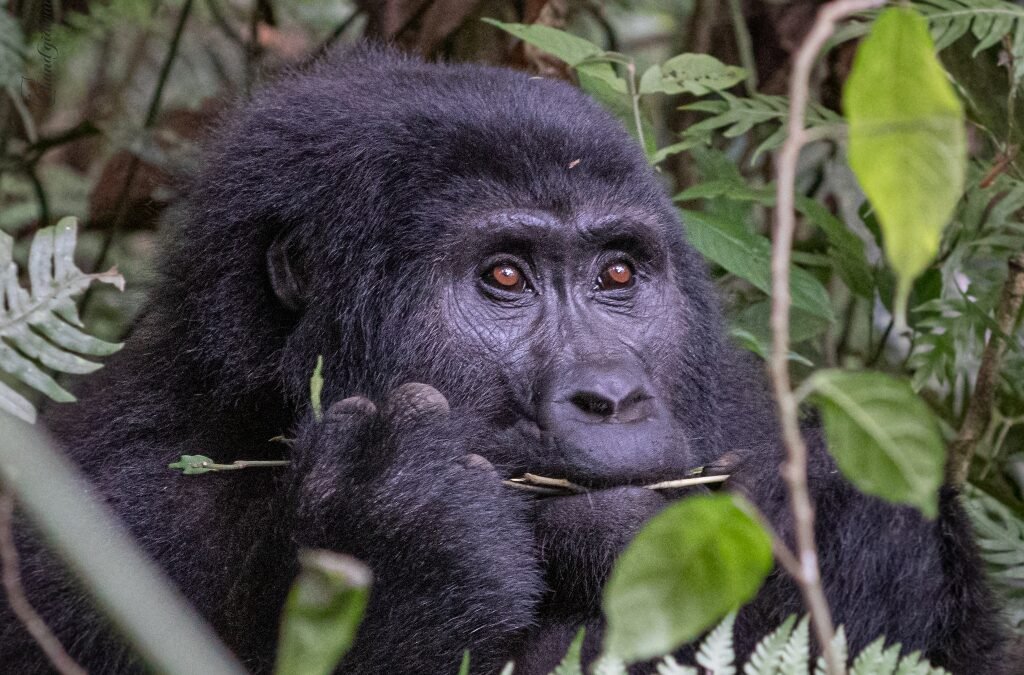
Book Rwanda Gorilla Trekking Tours. Meeting a wild mountain gorilla family is the kind of trip that people plan for years, and in Rwanda it can be organized in as little as one or two days. What takes time is the booking. Gorilla permits are limited, the best dates sell out, and the tour around the permit, from transport to lodging, has to fit that date. This guide explains how to book Rwanda gorilla trekking tours step by step, so that you know what to choose, what to ask and what to have ready before you pay.
Rwanda is one of the easiest countries in which to see gorillas. Visit Rwanda states that twelve gorilla families in Volcanoes National Park are fully habituated for visitors, that groups consist of at least one silverback with females and youngsters, and that only 96 permits are available each day. Each visit lasts up to one hour, and each group is limited to eight visitors. You can read the tourism board’s overview on its gorilla tracking page.
At Rwanda Gorilla Trekking Tours we handle the whole booking for you: the permit, the vehicle and driver-guide, the lodge near the park and the airport transfers. You can look at our full range of Rwanda gorilla trekking tours, start a request on our booking page or send us your dates through the contact page.
What This Booking Guide Covers
We start with the booking process and the permit, then explain how to choose the tour length, the right season and the group size. After that we cover the documents you need, the costs and what a good quotation should show, how to prepare once your booking is confirmed, ways to extend your trip and how to choose a reliable operator. Where a fact comes from an official body such as the Rwanda Development Board (RDB) or Visit Rwanda, we link to that source so that you can confirm current details. Prices and rules can change, so always check the official pages before you pay. You can also learn more about our team or begin on our home page.
How Booking a Rwanda Gorilla Trek Works, Step by Step
The process is simple once you see the order. First you choose your travel dates and the number of people. Second you check permit availability for those dates. Third you decide how much time you want, from a one-day trek to a longer safari. Fourth you confirm the permit, the accommodation and the transport, and finally you prepare for the trek. Doing the steps in that order avoids the most common problem, which is paying for flights or lodging before a permit is secured.
The permit comes first because it is the scarce item. With only 96 permits available each day, according to Visit Rwanda, popular dates fill quickly. Treat the permit as the anchor of your plan and build everything else around it.
Booking Directly With RDB or Through a Tour Operator
There are two ways to obtain a permit. The first is to apply on the Rwanda Development Board’s Visit Rwanda booking portal. The system works on a first-come, first-served basis: you select an available slot, complete the forms, upload your documents and pay, and a tourist permit is issued when the application is complete. This suits independent travellers who already have a firm plan and want to handle their own transport.
The second way is to book through a licensed tour operator. A permit guide on volcanoesnationalpark.org, a Rwanda travel information site, says that most operators organise permits at no extra cost as long as you cover money transfer or card charges. Using an operator also means that the vehicle, the lodge and the driver-guide are arranged together, so the permit date, the road transfer and the overnight stay all match. You can read that advice on its permit booking page.
For most visitors, especially those who do not know Rwanda, the second option saves time and risk. Our Rwanda gorilla permit page explains how we secure permits, and you can send your dates to us at any time through the contact page.
How Far in Advance Should You Book?
The permit guide referred to above recommends reserving at least six months ahead and notes that permits can sell out during peak seasons, sometimes about a month before the date. That is a useful rule of thumb rather than a fixed limit. If your dates are fixed, such as a wedding, a conference or a school holiday, book as early as you can. If your dates are flexible, you may find last-minute availability, but you should not rely on it. Once the permit is confirmed, book your flights and give us the arrival details so that we can prepare the transfer.
Rwanda Gorilla Permit Price for 2026
The standard international gorilla permit costs US$1,500 per person per day. That figure has applied since 6 May 2017, when RDB raised the price from US$750, as recorded in its notice on the increase of gorilla permit tariffs. RDB said the increase was meant to strengthen conservation and to benefit the communities living around Volcanoes National Park, and it raised the share of tourism revenue for those communities from 5 percent to 10 percent. Visit Rwanda also lists US$1,500 per person per day for visitors, and each permit allows one hour with a habituated family.
The RDB booking portal lists other categories. Foreign residents in Rwanda and African citizens are shown at US$500, and Rwandan and East African citizens at US$200. The portal adds that these are promotional rates and are not applicable from June to October 2026. Because prices can vary by category and date, always look at the current official gorilla tracking page before you budget, and tell us your nationality and residency when you ask for a quote so that we can quote the right category.
Discounts and Special Options
RDB’s 2017 announcement listed a 30 percent discount for visitors who spend three or more days at other national parks, such as Nyungwe and Akagera, in addition to gorilla trekking, and a 15 percent discount for conference visitors who travel before or after their event. The same announcement introduced an option to book an entire gorilla family for US$15,000, with a personalised guide service. These conditions may have changed, so treat them as questions to put to RDB or to your operator, not as promises. If you are thinking of a longer trip, read about Nyungwe National Park and Akagera National Park on our website.
What Your Permit Does and Does Not Include
The permit is for the gorilla trek and the hour with the family. Accommodation, transport from Kigali, meals and tips are paid separately, and the permit is not a visa. That is why a full tour quotation needs several lines, which we explain in the costs section below. If you are booking a short trip, our 2 days Rwanda gorilla trekking tour and 1 day Rwanda gorilla trekking options show how the permit fits into a compact itinerary.
Choosing Between a 1, 2, 3 or 4 Day Gorilla Tour
The right length depends on your time, your budget and how much energy you have. Because the park is about 104 to 105 kilometres from Kigali, a drive of two to three hours by 4×4 according to the Volcanoes National Park getting there guide, the country is compact enough for very short trips. The same guide says that visitors who overnight in Kigali have to start driving by 5am to reach the park headquarters for the 7am briefing, and that it is possible to track gorillas and return to Kigali on the same day.
The One Day Option
A 1 day Rwanda gorilla trekking trip is the shortest and lowest-cost way to see gorillas once you count accommodation. It suits business travellers, transit passengers and anyone who is happy with a very early start and a long day. Expect about five to six hours in the vehicle plus the trek itself, and plan to reach Kigali in the late afternoon or evening. Avoid booking an early flight for the next morning.
The Two Day Option
The 2 days Rwanda gorilla trekking tour adds a night in Musanze or near the park. You arrive, transfer north, sleep close to Kinigi, trek in the morning and return to Kigali in the afternoon. It is the most balanced short itinerary, because you avoid the 5am drive and can prepare calmly for the trek. Musanze is described by Visit Rwanda as a convenient base for gorilla tracking, at about 1,850 metres above sea level and 13 kilometres from the Kinigi headquarters, on its Musanze page.
Three and Four Day Options
With three or four days you can pair the trek with other activities. A 3 days Rwanda gorilla safari can add golden monkey tracking or a hike, while a 4 days Rwanda gorilla safari leaves room for a rest day, a Kigali city visit or another region. A longer trip also gives you more time to recover from travel and to enjoy the region.
Rwanda and Uganda Combinations
Some travellers want to compare the two countries or to see gorillas twice. Our Rwanda and Uganda gorilla safaris combine both, and our page on Uganda gorilla trekking explains the alternative. Each country has its own permit system and its own price, so if you combine them you must book two separate permits. See our Rwanda safari tours page for other combined ideas.
Best Season to Book Your Gorilla Trek
Gorillas can be visited all year, but the weather changes how the walk feels. A seasons guide on volcanoesnationalpark.org describes a long dry season from June to September and a short dry season from December to February, with rainy periods from March to May and from October to November. It calls March and April the wettest months. In the dry seasons the ground is drier and the walking is less challenging, and the guide gives daytime temperatures of about 25 to 27 degrees Celsius with nights of 13 to 15 degrees. Read the full explanation on its best time to go gorilla trekking page.
The rainy season is not a bad time to go. The same guide says that the ground can be muddy and slopes slippery, which makes trekking harder, but that abundant vegetation means gorillas do not travel far for food, which can make them easier to find. It also warns that rain should be expected at any time of the day in any season. Whenever you go, pack waterproofs, and if you are booking in a wet month choose a lodge with a warm room and a place to dry your gear.
How Season Affects Availability
Many travellers prefer the dry months, and the permit guide notes that permits can sell out in peak seasons, so book early if you want June to September or December to February. Permits can also sell out in other months, so do not assume that the rainy season is always easy. We can compare the seasons for your dates when you contact us through our contact page.
Group Size, Families and Special Requests
Each gorilla group is limited to eight visitors, according to RDB’s tracking page. That has three consequences for bookings. A party of up to eight can normally be placed together, a larger party has to be split across families, and a single traveller may share a group with strangers. If you travel with friends or family, book all permits together and tell us that you want to stay in one group. The park allocates families on the morning of the trek according to fitness, as Visit Rwanda explains, so you cannot guarantee a particular family or a short walk. What you can do is tell us in advance about age, fitness and mobility, so that we can plan around it and suggest a porter if that would help.
Booking for Families, Couples and Solo Travellers
Families with children need to check the age limit: RDB states that the minimum age for gorilla tracking is 15 years. Couples and solo travellers usually get a smooth experience with a private vehicle and a driver-guide, and solo travellers can ask about sharing costs with other guests. Our about page tells you more about our team.
Documents and Details You Need to Book
A permit application is a formal document, so have your details ready before you start. For every trekker you will need the full name exactly as it appears in the passport, the passport number and nationality, the date of birth, your preferred trek date and your contact details. The RDB portal asks applicants to complete forms and upload documentation before payment, so a clear scan of the passport photo page saves time. If you book through us, send these details together with your arrival and departure information through our booking page, and we will confirm that everything matches before the permit is requested.
Check the ages of everyone in your party. The minimum age to track gorillas is 15 years, and this applies to every member of a group. Also tell us about any medical conditions, dietary needs or mobility issues so that we can plan the lodge and the trek around them.
Visa and Entry Requirements
Rwanda’s visa rules are relatively open, but they depend on nationality, so check your own. According to Visit Rwanda’s immigration and visas page, citizens of all countries can get a visa on arrival without applying in advance. Members of the African Union, the Commonwealth and La Francophonie are listed as receiving a free visa on arrival for a 30-day visit, and East African Community citizens can stay visa-free for up to six months. For other nationalities the page states that fees must not exceed US$50 for a single-entry visa or US$70 for multiple entries. The same page says that no single agent is authorised to apply for a visa on your behalf, and that non-exempt citizens can apply online or at a Rwandan mission before departure.
The immigration service explains the process on its visa on arrival page. Rules change, so confirm them before you fly, and make sure that your passport is valid for the whole stay.
Payment, Deposits and Confirmation
Permits are issued once payment is complete, so expect to pay the permit fee at or soon after booking. The permit guide from volcanoesnationalpark.org notes that operators typically arrange permits for free if you cover transfer or card charges, which is why a quotation may include small bank or card fees. Ask your operator for a written payment schedule that states what you pay now, what you pay later and what happens if your plans change. We provide a written quotation on request through our contact page, and we confirm the booking with the permit details in writing.
Travel Insurance and Health Documents
Take out travel insurance that covers medical treatment and evacuation, and check your vaccination requirements with a health professional before you travel. Because the trek involves altitude and steep ground, keep your medical information and your emergency contacts with you on trek day. Any health rules that apply to your entry into Rwanda are set out by the authorities, so verify them on official pages before you travel.
What Does a Gorilla Trekking Tour in Rwanda Cost?
The permit is the fixed part of the price. For an international visitor it is US$1,500 per person, which means US$3,000 in permits for two trekkers and US$6,000 for four, before anything else is added. On top of that come the vehicle and driver-guide, lodging, meals, and any extras such as porters. Those items vary with the season, the group size, the standard of lodge and the number of days, so a responsible operator gives you a written quotation instead of a single headline price.
The table shows how a typical quote is structured. Use it as a checklist when you compare offers, and adjust it to the tour you choose. Your own quotation will state exactly what is covered.
| Item | Usually covered in the tour price | Usually extra |
|---|---|---|
| Gorilla permit | Yes, when booked through the operator | Not applicable |
| Airport pick-up and drop-off | Yes | Not applicable |
| Private 4×4 with driver-guide | Yes | Fuel for major detours |
| Accommodation near the park (2 days and longer) | Yes, at the level you choose | Upgrades |
| Meals | Usually breakfast, sometimes all meals | Drinks and extras |
| Porter | Sometimes | Tips |
| Golden monkey or other activity permits | Only if added to the tour | Yes |
| Visa, flights, insurance | No | Yes |
| Personal spending and tips | No | Yes |
How to Compare Quotations Fairly
A cheap quotation is not always a good one. Compare like with like: check the permit category, the number of nights, the standard of the accommodation, the type of vehicle and whether meals and transfers are included. Ask whether card or bank charges are added, what the payment schedule is and what happens if your dates change. If a price looks far below the permit fee plus normal transport, ask what has been left out. Our Rwanda gorilla trekking tours page shows the packages we offer, and you can request a personalised quote through the contact page.
Ways to Keep Costs Under Control
You cannot reduce the permit price, but you can manage the rest. Travel in a group so that the cost of the vehicle is shared, choose a mid-range lodge, avoid unnecessary transfers, and consider a shorter tour if your budget is tight. The Rwanda Development Board’s 2017 announcement mentions a 30 percent discount for visitors who spend three or more days at Nyungwe or Akagera as well as gorilla trekking, so if you were planning a longer stay anyway, ask whether the discount still applies to your booking. For ideas on how to combine parks, see our Rwanda safari tours.
After You Book: Get Ready for Trek Day
Once your permit is confirmed, use the time before travel to prepare your body and your kit. Visit Rwanda reports that hikes to the gorillas range from 30 minutes to four hours and can reach altitudes between 2,500 and 4,000 metres, so the walk can be short or demanding depending on the family you are allocated. There is no fitness test, but you should be comfortable walking uphill for several hours on uneven ground. In the weeks before your trip, walk on hills, use stairs, carry a light daypack and break in your boots.
You can read the tourism board’s description of what to expect on its gorilla tracking page. If you have a medical condition, speak to your doctor before you travel and tell us when you book so that we can discuss a porter and the help available on the day.
Trek Day Schedule
On the morning of the trek you report to the park headquarters at Kinigi at 7am, where the rangers brief visitors on the rules and allocate them to a gorilla family according to fitness. If you sleep in Musanze, that is a short drive, since Kinigi is 13 kilometres from town. If you sleep in Kigali, you must leave by about 5am. After the walk you may spend up to one hour with the gorillas, and then you return to the headquarters and to your lodge or vehicle.
Rules You Must Follow With the Gorillas
The rules are strict because the gorillas are wild and can catch human diseases. RDB asks visitors to keep a distance of seven metres, to keep their voices low, to avoid sudden movements, to leave out flash photography and to stay away from the gorillas if they are ill. A summary of the gorilla trekking rules in Rwanda adds that eating, drinking and smoking are not allowed near the gorillas, that you should turn your head away when you cough or sneeze, and that you must not litter or pick plants. If you wake up with a cold or another contagious illness, tell your guide, because sick visitors cannot see the gorillas.
What to Pack and Wear
Dress in layers and choose sturdy clothing and solid walking shoes. Visit Rwanda’s Volcanoes National Park profile says gaiters and a lightweight waterproof are useful in the rain. Add long trousers, a long-sleeved shirt, a warm fleece, gloves for gripping branches, a hat, sunscreen and insect repellent. In your daypack carry water, snacks, your camera with a spare battery, a small first-aid kit and your permit confirmation and passport. Keep the flash switched off and a zoom lens ready, because you must stay at least seven metres away.
For tips on longer preparation, read more on our blog, and if you have questions about kit or fitness before you book, send them through the contact page.
Add Golden Monkey Tracking to Your Booking
Golden monkeys are the most popular add-on because they live in the same park. RDB’s golden monkey tracking page describes them as having bright orange fur that contrasts with the green rainforest of the Virunga Mountains, living in troupes of up to 30 and found almost exclusively in Volcanoes National Park. It lists a permit at US$100 for foreign adults, a minimum age of 12, a maximum of sixteen visitors per group and a 7am report time at the park visitor centres. Since gorilla trekking also starts at 7am, the two activities take place on separate days. See our golden monkey tracking in Rwanda page and ask us to add a day when you book.
The Dian Fossey Legacy and Other Attractions Near the Park
The Karisoke Research Center was founded by Dian Fossey on 24 September 1967, and the Dian Fossey Gorilla Fund’s Karisoke page explains that its name combines Mount Karisimbi and Mount Bisoke, and that its work includes removing snares and preventing poaching. Visitors who are interested in that history can ask about our Dian Fossey hike. Other places listed by Visit Rwanda near the park include the Musanze caves, the crater lake on Bisoke and the Buhanga Eco-Park, and its Musanze page names Lakes Karago, Burera and Ruhondo. You can find more ideas on our page for Volcanoes National Park.
Kigali, Nyungwe and Akagera
Many travellers combine the gorillas with the rest of Rwanda. Kigali is your gateway, and a Kigali city tour gives you a look at the capital before or after the trek. For a different landscape, read about Nyungwe National Park and Akagera National Park. As mentioned earlier, RDB’s 2017 announcement linked a discount to stays of three or more days at those parks, so ask about it if you plan to extend your itinerary.
Visiting Uganda After Rwanda
If you want to see more of East Africa, you can continue by road to Uganda, which has its own gorilla parks and its own permit rules. Our Rwanda and Uganda gorilla safaris page shows how to plan both, and our overview of Uganda gorilla trekking explains that side of the trip.
How to Choose a Reliable Gorilla Tour Operator
The operator you choose affects your comfort, your safety and the smoothness of your permit booking. Ask each company how it obtains permits and whether the permit is booked in your name before you pay the full amount. Ask for a written itinerary, a clear list of inclusions and exclusions and the names of the lodges. Read recent traveller reviews on independent sites and ask how many years the company has been running gorilla tours. A good operator answers questions clearly, does not pressure you and explains its cancellation terms in writing. You can ask us these questions directly through our contact page, and you can see who we are on our about page.
Five Booking Mistakes to Avoid
The first mistake is buying flights before the permit is confirmed. The second is waiting too long, since the permit guide warns that permits can sell out in peak seasons. The third is giving passport details that do not match the passport exactly. The fourth is comparing prices without checking what is included. The fifth is planning a tight schedule, for example an early flight the day after a one-day trek. Avoid these and your booking will be far smoother.
Frequently Asked Questions About Booking Gorilla Trekking in Rwanda
How Much Is a Gorilla Permit in Rwanda?
For international visitors the permit is US$1,500 per person per day, as listed by Visit Rwanda and by RDB’s booking portal. The portal lists lower categories for residents and African citizens and warns that promotional rates do not apply from June to October 2026, so check your category and date on the official page.
Can I Book Gorilla Trekking in Rwanda for Just One Day?
Yes. The park is about two to three hours from Kigali, and you can trek and return the same day if you leave very early. Read our 1 day Rwanda gorilla trekking page for the schedule, or choose the two-day option for a more relaxed pace.
How Long Do You Spend With the Gorillas?
Up to one hour, in a group of no more than eight visitors, with a distance of seven metres to be kept where possible.
What Is the Minimum Age?
The minimum age for gorilla tracking is 15 years, according to RDB.
Book Your Rwanda Gorilla Trekking Tour Today
To book a Rwanda gorilla trek, choose your dates, secure the permit, pick the tour length that fits your schedule, prepare your documents and pack for the forest. Our team can manage every step, from the permit to the transfers and the lodge. Start by browsing our Rwanda gorilla trekking tours, read more tips on our blog and send your preferred dates through the booking page or the home page. Permits are limited, so the best time to begin is now.