- LET'S PLAN YOUR SAFARI
- +256 200 921 002
- +256 793 194 703
- info@rwandagorillatrekkingtours.com

Tour Combining Akagera National Park with Gorilla Trekking
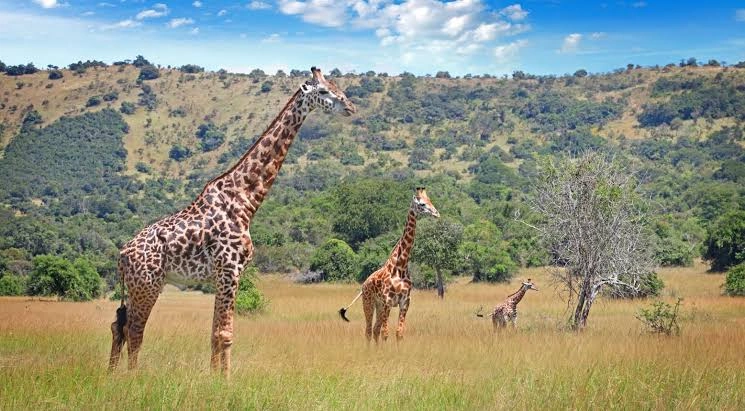
Tour Combining Akagera National Park with Gorilla Trekking. Most visitors picture Rwanda as a single-purpose destination: fly in, trek gorillas, fly out. That undersells the country badly. Barely two and a half hours east of Kigali sits Akagera National Park, a savanna and wetland reserve that now holds all of the Big Five, while a similar drive north puts you at the foot of the Virunga volcanoes for gorilla trekking. No other country lets you pair a genuine savanna Big Five safari with mountain gorilla trekking inside a single, compact, four-day loop — and that combination is what this guide is built around.
Below is everything you need to plan a trip that combines Akagera National Park with gorilla trekking: a day-by-day itinerary, what wildlife to expect in each park, permit and park-fee costs for 2026, the best season to travel, and how the logistics of moving between a savanna ecosystem and a rainforest actually work. We’ve linked directly to our own Akagera and gorilla trekking combo tour and to trusted ground-transport partners throughout, so you can move from planning straight into booking.
Why Combine Akagera National Park with Gorilla Trekking
Gorilla trekking alone is an extraordinary experience, but it’s also a single, narrow slice of what Rwanda’s ecosystems offer. Akagera fills the gap that a lot of first-time visitors don’t realize exists: open savanna, papyrus swamp, and acacia woodland teeming with lions, elephants, rhinos, giraffes, and buffalo — nothing like the dense, misty bamboo forest of Volcanoes National Park. Pairing the two means your trip covers two completely different African landscapes and wildlife experiences without needing to leave Rwanda, cross a border, or add more than a day or two to your schedule.
There’s also a practical reason this pairing has become so popular: both parks are roughly equidistant from Kigali, on opposite sides of the capital. That means Kigali functions as a natural hinge point, letting you build a loop itinerary — Kigali to Akagera, back through Kigali to Musanze, gorilla trek, and back to Kigali for departure — without ever backtracking over the same stretch of road twice.
It’s a pairing that also tends to suit a wider range of travelers than gorilla trekking alone. Families traveling with anyone under the gorilla trekking age minimum of 15, or travelers who simply want a lower-intensity day built into an otherwise physically demanding trip, get a full day of vehicle-based game viewing in Akagera that requires none of the hiking a gorilla trek does. It turns what could be a single, narrow “tick the box” activity into a fuller safari with something for every member of a mixed group.
Two Ecosystems, One Small Country: Why This Combo Works
Rwanda is small enough that this kind of contrast trip is genuinely realistic in under a week. Akagera sits in the country’s low-lying east, bordering Tanzania, with an average elevation under 1,500 meters and a hot, dry savanna climate. Volcanoes National Park, by contrast, climbs the slopes of the Virunga chain in the northwest, with cloud forest starting around 2,500 meters and a cool, often misty climate year-round. Traveling between them in a single trip means packing for two different climates, but it also means your photos, your wildlife list, and your overall sense of the country end up far richer than a gorilla-only itinerary delivers.
Akagera National Park at a Glance
Akagera National Park covers roughly 1,122 square kilometers of savanna, low mountains, and a chain of lakes fed by the Kagera River, which forms part of Rwanda’s border with Tanzania. After a near-total collapse of wildlife populations following the 1994 genocide and subsequent resettlement of the park’s boundaries, a partnership between Rwanda Development Board and African Parks turned Akagera into one of the continent’s genuine conservation comeback stories. Lions, locally extinct for roughly 20 years, were reintroduced in 2015; eastern black rhinos followed in 2017 and 2019, restoring the park’s full Big Five status alongside its existing elephant, buffalo, and leopard populations.
Volcanoes National Park at a Glance
On the other side of the country, Volcanoes National Park protects 160 square kilometers of Afromontane forest across five volcanic peaks shared with Uganda and the Democratic Republic of Congo. This is Dian Fossey’s old research ground, and today around a dozen habituated gorilla families are open to daily, permit-controlled trekking. Where Akagera rewards you with wide-open sightlines and big mammals at a distance, Volcanoes National Park delivers the opposite: close, quiet, forest-floor encounters with a family of gorillas a few meters away.
The Best Itinerary: 4 Days, 3 Nights
Four days is the minimum realistic window for combining both parks without feeling rushed, and it’s the itinerary length we build most often for travelers asking specifically for this pairing. Here’s how it typically unfolds.
Day 1: Arrival in Kigali and Drive to Akagera
Most itineraries begin with an airport pickup in Kigali followed directly by the roughly two-and-a-half-hour drive east to Akagera, timed so you arrive at your lodge in the early afternoon with time for a short game drive or a sundowner boat cruise on Lake Ihema before dark. Travelers connecting from Uganda instead of flying directly into Kigali often prearrange this first leg with a Pick and Transfer Safaris vehicle, since cross-border pickups are part of their core business. Because the game drive component doesn’t start until the following morning, day one is a comparatively light travel day, which also makes it a natural point to settle into East African time and shake off any long-haul jet lag before the itinerary picks up pace.
Day 2: Full-Day Big Five Game Drive in Akagera
The second day is dedicated entirely to Akagera, typically split between an early-morning game drive through the park’s northern savanna sector — the best window for predator activity — and an afternoon boat cruise or second drive through the southern lake system, where hippos, crocodiles, and enormous flocks of water birds congregate. A full-day Akagera Big Five game drive realistically needs the whole day to cover both sectors properly, which is why we don’t recommend trying to squeeze Akagera into a rushed half-day stop on the way to somewhere else.
Day 3: Transfer to Musanze and Trek Preparation
Day three is a travel day, crossing back through Kigali (roughly two and a half hours from Akagera) and continuing north to Musanze, gateway to Volcanoes National Park (another two and a half to three hours). It’s a long day in the vehicle, but the route itself is scenic, winding through Rwanda’s terraced hillsides, and most travelers use the Kigali stopover for lunch and a stretch before continuing. On arrival in Musanze, your operator should walk you through the following morning’s early trekking start, gear checklist, and porter arrangements.
Day 4: Gorilla Trekking in Volcanoes National Park
Trek day starts with a 7:00 a.m. registration at park headquarters in Kinigi, where rangers assign each group to a specific habituated gorilla family based on fitness level and trail difficulty. The walk itself can run anywhere from 30 minutes to three or four hours depending on where the family has moved overnight, and once located, every group is guaranteed exactly one hour in the gorillas’ company. Afterward, most travelers either overnight one more night near the park or drive straight back to Kigali for a same-day flight, depending on departure time. If your flight leaves in the evening, the descent from the trailhead usually wraps up by early afternoon, leaving enough of a buffer for the roughly three-hour drive back to Kigali International Airport without cutting it uncomfortably close — though we generally still recommend building in a night’s buffer wherever a traveler’s schedule allows it, since gorilla treks occasionally run longer than expected.
Quick tip: If four days feels tight, our 4-day Akagera and gorilla trekking itinerary can be stretched to five or six days by adding an extra night in Akagera for a second game drive, or a detour through Nyungwe Forest on the return leg.
Extending to 5 or 6 Days: Adding Nyungwe or Lake Kivu
Travelers with an extra day or two often use it to add Nyungwe Forest National Park, home to roughly 500 habituated chimpanzees and Africa’s oldest montane rainforest, or a relaxed stopover at Lake Kivu between Musanze and the return to Kigali. Both extensions turn the four-day core itinerary into a more complete Rwanda circuit — savanna, rainforest gorillas, primates, and a lake — without requiring you to leave the country or repeat a border crossing.
Extending to Uganda: Bwindi, Border Crossings, and Onward Travel
Because Volcanoes National Park sits so close to the Uganda border, a meaningful number of travelers doing the Akagera-and-gorilla combo also tack on a few days across the border in Bwindi Impenetrable Forest, either to compare Uganda’s gorilla families with Rwanda’s or simply because their flight home departs from Entebbe rather than Kigali. If that’s part of your plan, it’s worth reading up in advance on what to do after a gorilla tour in Bwindi, since the onward logistics and timing differ depending on which direction you cross. Travelers overnighting on the Uganda side before or after crossing commonly stay at properties like the Ikoro Hotel in Kisoro, a convenient staging point near the border post.
For anyone weighing a route that starts in Kigali and ends in Entebbe (or the reverse), it’s worth reading through the practicalities of starting your tour in Kigali and ending in Entebbe before booking flights, since an open-jaw itinerary like this usually works out cheaper and less time-consuming than flying back into Kigali just to fly out again. A dedicated cross-border transfer service handles the paperwork and border-crossing steps that trip up a lot of first-time travelers, and the same operators can typically arrange a Entebbe Airport pick-up or drop-off at the end of the drive. If you decide once you’re already in the region that you want a second gorilla trek on the Uganda side, some operators can also offer help securing a gorilla permit in Bwindi on relatively short notice — worth asking about even if it isn’t part of your original plan. You can read more about how these ground operators approach cross-border logistics on their about page.
What Wildlife You’ll Actually See in Akagera
Akagera’s species list has grown substantially since the reintroduction program began. Expect elephants, Cape buffalo, giraffes, zebras, topi, impala, and, with a reasonable amount of luck and a good guide, lions and eastern black rhinos, both still present in modest but growing numbers. Hippos and Nile crocodiles are close to guaranteed on any lake cruise, and the park’s birdlife — over 500 recorded species — includes the rare, prehistoric-looking shoebill stork in the papyrus swamps of the southern sector. Sightings vary by season and by how much time you allow, which is the main argument for a full day rather than a rushed drive-through. Leopards remain the hardest of the Big Five to spot here, as they do almost everywhere, but experienced trackers who know the park’s ravine systems and recent sighting patterns improve the odds considerably — another reason a guided, well-planned day beats a self-drive shortcut.
What to Expect on the Gorilla Trek
The gorilla trek itself is a different kind of wildlife encounter entirely — slower, quieter, and far more intimate than anything a game drive can offer. Groups are capped at eight trekkers per gorilla family, and once your guide locates the family, you approach on foot, leave walking sticks and bags with the porters, and spend your allotted hour watching silverbacks, mothers, and juveniles at close range. It’s worth mentally preparing for the contrast: Akagera rewards patience and distance, while gorilla trekking rewards proximity and stillness.
Gorilla Permit and Akagera Park Fees in 2026
A gorilla trekking permit from the Rwanda Development Board costs US $1,500 per person for international visitors, a price that has held steady for several years and funds ranger patrols, veterinary monitoring, and community revenue-sharing around Volcanoes National Park. Akagera’s park entry fees are separate and considerably lower, typically in the range of $100 per person per day for non-residents, with boat cruises and guided game drives priced as add-ons. Because gorilla permits are limited per family per day and sell out well in advance during peak months, we always recommend confirming current gorilla permit pricing and availability before locking in flights for a combined itinerary.
Best Time of Year for This Combined Safari
Akagera is a rewarding destination almost year-round, since its open savanna terrain doesn’t turn impassable the way forest trails can during heavy rain. Gorilla trekking, however, is noticeably more comfortable during Rwanda’s two dry seasons — June through September and December through mid-February — when Volcanoes National Park’s trails are firmer and less slippery. Because a combined itinerary depends on both parks cooperating weather-wise, we generally steer travelers toward these dry-season windows, and our full best time to go gorilla trekking guide breaks the trade-offs down month by month, including how each season affects Akagera’s game viewing.
How to Get Between Akagera and Volcanoes National Park
Every leg of a combined Akagera-and-gorilla itinerary runs through Kigali, so reliable, private ground transport matters more here than on a single-park trip. A dedicated driver-guide who stays with you for the full loop, rather than separate transfers booked piecemeal, removes most of the coordination risk. Travelers arriving via Uganda instead of Kigali can arrange reliable Kigali airport transfers or a car hire with a driver-guide who can handle the cross-border leg as part of the same trip. For the Akagera-to-Musanze stretch specifically, some travelers also book a direct Akagera to Volcanoes National Park transfer rather than routing every leg back through a Kigali hotel stopover.
Where to Stay: Akagera Lodges and Musanze Lodges
Akagera’s accommodation ranges from a public campsite and a mid-range lodge inside the park to a luxury tented camp overlooking Lake Ihema, while Musanze offers everything from comfortable guesthouses to some of Africa’s most exclusive volcano-view lodges. For a four-day loop, proximity matters on both ends: a lodge close to Akagera’s game-viewing sectors saves driving time on your one full day there, and a lodge close to Kinigi park headquarters means less pre-dawn driving before your gorilla trek. We match lodges to trip length and budget as part of every Rwanda safari package we put together, rather than defaulting to a single fixed property. Booking accommodation for both legs through the same operator also means one cancellation policy and one point of contact if a flight delay pushes your Akagera arrival back, rather than juggling two separate hotel reservations under two different sets of terms.
What to Pack for a Savanna-to-Rainforest Safari
Packing for this combination trip means packing for two climates in one bag. For Akagera: light, neutral-colored clothing, sun protection, and binoculars for spotting game at distance. For the gorilla trek: waterproof hiking boots, a rain jacket, long sleeves and trousers tucked into boots and gloves against stinging nettles, and cash for porter and ranger tips. Our detailed packing list for gorilla trekking covers both halves of the trip and flags exactly what to layer for the temperature swing between the two parks. A soft-sided duffel rather than a hard-shell suitcase is also worth packing, since it’s far easier to load in and out of a 4×4 across multiple transfers, and a dry bag for cameras and phones is cheap insurance against both Akagera’s lake spray and Volcanoes National Park’s forest rain.
Rules to Know: Gorilla Trekking and Akagera Game Drives
Gorilla trekking rules are strict and well enforced: a minimum age of 15, groups capped at eight trekkers per family, a mandatory seven-meter distance from the gorillas, and no flash photography or loud talking near the family. Akagera’s rules are more typical of a conventional game park — staying inside the vehicle in predator zones, no off-road driving outside authorized tracks, and adherence to the park’s dusk-to-dawn closure. We walk every traveler through both sets of rules in detail in our gorilla trekking rules and regulations guide, since the two parks operate under noticeably different codes of conduct. One rule worth flagging specifically for this combined itinerary: anyone showing cold or flu symptoms on gorilla trek day may be asked to sit the trek out, for the gorillas’ protection rather than yours, so it’s worth building a little schedule flexibility into the days immediately before your trek in case a reschedule becomes necessary.
Budget Breakdown for the Combined Tour
A realistic all-in budget for a 4-day, 3-night Akagera-and-gorilla combo — permit, Akagera park fees, mid-range lodging in both parks, private transport, and meals — typically runs between $2,800 and $4,200 per person, with the gorilla permit alone accounting for over half that figure. Luxury lodges in either park push the total considerably higher, while budget-conscious travelers can trim costs by choosing a public campsite in Akagera and a smaller guesthouse in Musanze. Because so many separate moving pieces — permits, two sets of park fees, and multiple transfers — go into this itinerary, booking it as a single package rather than assembling it leg by leg is usually both cheaper and far less prone to scheduling gaps. It’s also worth budgeting a contingency of roughly 5 to 10 percent above whatever quote you receive, to cover optional add-ons discovered once you’re on the ground — a second Akagera boat cruise, an extra night at Lake Kivu, or a same-day permit reschedule in the rare case that illness or a missed connection forces a change of plan.
Conservation Story: Rhinos, Lions, and Gorillas All Recovering
What makes this particular combination especially meaningful is that both parks represent active, ongoing conservation recoveries rather than static wildlife destinations. Akagera’s lion and rhino reintroductions restored a Big Five population that had been locally extinct for two decades, while the mountain gorilla population across the Virunga Massif and Bwindi-Sarambwe has grown to just over 1,000 individuals, enough for the IUCN to reclassify the species from Critically Endangered to Endangered in 2018. Tourism revenue — including every permit and park fee paid on this itinerary — funds the ranger patrols, veterinary care, and community revenue-sharing that made both recoveries possible. Both stories share the same underlying mechanism: strict, permit-controlled tourism generating enough revenue to fund the anti-poaching patrols, veterinary care, and community revenue-sharing that conservation actually depends on. Choosing a combined trip that visits both parks, rather than treating one as an afterthought, is a small but direct way of supporting both recoveries at once. Read more about our approach to responsible, conservation-linked travel on our about us page.
Is the Extra Day Worth It Compared to a Gorilla-Only Trip?
It’s a fair question, since adding Akagera does add cost, driving time, and at least one extra day to what could otherwise be a lean two- or three-day gorilla-only trip. Our honest answer: for most travelers, yes. The marginal cost of a day in Akagera — park fees, one extra night’s accommodation, and a longer transfer — is small relative to the $1,500 gorilla permit that anchors the whole trip, and the wildlife and landscape you gain access to is completely different from anything Volcanoes National Park offers. If you’ve already committed to the flights, the visa, and the gorilla permit cost, the incremental case for adding a Big Five day is strong.
Where a gorilla-only trip still makes more sense is a genuinely constrained schedule — a business trip with a single free weekend, for example, or a traveler who has already done a separate Big Five safari elsewhere in East Africa and specifically wants the shortest possible gorilla-focused visit. In that case, our standalone short gorilla trekking tours are built for exactly that scenario, and either itinerary can be quoted side by side so you can compare cost and time before deciding.
Booking Your Akagera and Gorilla Trekking Combo
We build every combined itinerary around actual permit and park-fee availability rather than a fixed template, which matters most in peak season when gorilla permits sell out weeks or months ahead. A typical quote includes gorilla permit sourcing and confirmation, Akagera park fees and activity bookings, private 4×4 transport with an experienced driver-guide for the full loop, accommodation matched to your budget in both parks, and one point of contact for the entire trip. Browse our full range of Rwanda safari packages, read reviews from past travelers who’ve done this exact pairing, or check our gorilla trekking FAQs for more detail before reaching out.
FAQs About Combining Akagera with Gorilla Trekking
How many days do I really need? Four is the practical minimum for a proper full day in Akagera plus a gorilla trek without feeling rushed. Five or six days comfortably adds Nyungwe or Lake Kivu.
Which should I do first, Akagera or the gorilla trek? Either order works logistically since both routes pass through Kigali, but most operators, including us, default to Akagera first, since it lets you acclimatize before the more physically demanding trek.
Is the drive between the two parks difficult? No — the roads are paved and well maintained, though the full Akagera-to-Musanze leg via Kigali does take most of a day, which is why it’s built in as a dedicated travel day rather than squeezed alongside another activity.
Can I see rhinos and lions guaranteed? No sighting in a wild park is ever guaranteed, but both species are present in growing numbers, and a full day with an experienced guide gives you a strong realistic chance at both.
Do I need separate bookings for the gorilla permit and Akagera fees? Not if you book through an operator — we handle both as part of a single itinerary, which also protects you if one leg needs to shift due to weather or availability.
Is Akagera safe to visit given it now has lions? Yes. Game drives are conducted from closed vehicles with an experienced guide, and walking is restricted to designated, ranger-supervised areas only, exactly as it would be in any established Big Five reserve.
Will I need a different visa arrangement for this itinerary versus a gorilla-only trip? No — both parks are inside Rwanda, so a single Rwandan e-visa or visa on arrival covers the entire loop. A separate visa only becomes relevant if you extend the trip into Uganda.
Ready to Book Your Akagera and Gorilla Safari
Combining Akagera National Park with gorilla trekking is, for many travelers, the single best way to experience Rwanda’s full range as a wildlife destination in one trip — savanna Big Five game drives on one side of the country, and a quiet, close encounter with a mountain gorilla family on the other, all inside a manageable four-to-six-day window. Contact our safari consultants with your travel dates, and we’ll confirm permit and park-fee availability, build the full itinerary around it, and handle transport and accommodation from the moment you land to the moment you fly out.
Rwanda’s conservation story is, at its heart, a story about two very different animals getting a second chance in the same small country at roughly the same time — the Big Five returning to Akagera’s savanna, and the mountain gorilla population climbing steadily back from the edge of extinction in the Virunga forest. Seeing both on one trip isn’t just logistically convenient; it’s the clearest possible picture of what two decades of sustained conservation investment in Rwanda has actually achieved.