- LET'S PLAN YOUR SAFARI
- +256 200 921 002
- +256 793 194 703
- info@rwandagorillatrekkingtours.com

Chimpanzee and Gorilla Combination Safari in Rwanda
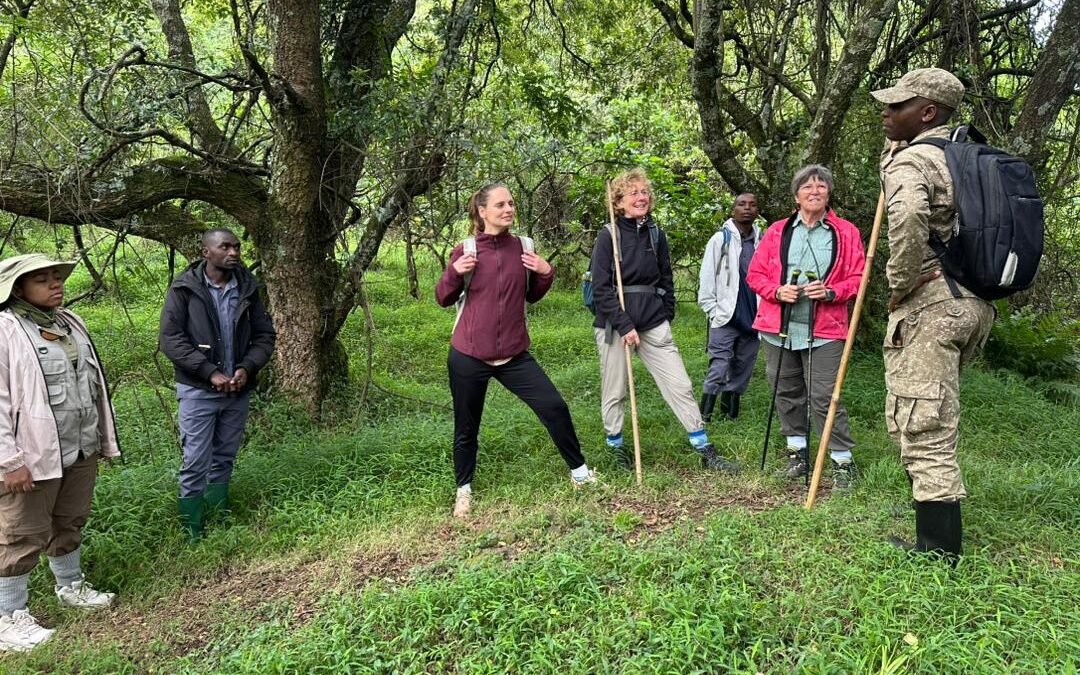
Chimpanzee and Gorilla Combination Safari in Rwanda. Few wildlife experiences on Earth can match the feeling of sitting quietly in a misty forest while a wild great ape goes about its day just a few meters away. Now imagine doing that twice in one trip: first with a family of mountain gorillas in the bamboo-clad volcanoes of the north, then with a chattering community of chimpanzees in the ancient rainforest of the south. That is exactly what a chimpanzee and gorilla combination safari in Rwanda delivers, and it is one of the most rewarding primate journeys in Africa.
What makes Rwanda special is how compact and comfortable this adventure can be. Both trekking destinations lie inside a single small country, connected by good roads and scenic mountain drives, with no border crossings and no internal flights required. You can meet both species in as little as five days, and add golden monkeys, colobus troops, a suspended canopy walkway and even a Big Five savannah safari if you have more time. Our range of gorilla safaris makes it easy to build a route that matches your dates and budget.
In this guide, you will learn how the two treks differ, what permits you need, when to travel, how to choose between the most popular itineraries and what to pack. You will also see how Rwanda compares with a similar trip across the border in Uganda. By the end, you will know exactly how to plan a gorilla and chimpanzee safari that fits your time, fitness and budget.
Why Combine Chimpanzees and Gorillas in One Rwanda Safari?
Gorillas and chimpanzees are two of our closest living relatives, yet they could hardly be more different in behaviour. Gorillas are calm, gentle giants that live in stable family groups led by a silverback, while chimpanzees are energetic, vocal and endlessly inventive, living in large communities that constantly split and regroup. Seeing both in the same trip lets you compare their social lives, their movements and even their facial expressions, and it turns a single wildlife highlight into a deeper understanding of primate life.
There is also a practical advantage. Rwanda is one of the very few countries where you can track mountain gorillas and wild chimpanzees within the same short journey, all without leaving the country. That saves money on visas, cross-border fees and extra flights, and it removes much of the stress of coordinating logistics between countries. With good tarmac roads, dependable park management and a reputation for safety, Rwanda is an ideal choice for first-time safari travellers and seasoned Africa hands alike.
Two Great Apes, Two Very Different Forests
The two experiences take place in landscapes that feel like different worlds. Volcanoes National Park in the north-west sits high on the slopes of the Virunga volcanoes, with bamboo forests, wild celery meadows and cool, misty air at elevations above 2,400 metres. The terrain can be steep and muddy, but the views of the volcanic peaks are unforgettable. Nyungwe Forest National Park in the south-west, by contrast, is a vast, ancient montane rainforest covering more than 1,000 square kilometres, thick with tree ferns, orchids and towering trees that echo with birdsong.
Together, the two parks show Rwanda’s ecological range in one journey. You climb from the cool volcanic highlands to the dense, humid forest on the border with Burundi, passing rolling tea estates, terraced farms and lake views on the way. The contrast in scenery, climate and wildlife is part of what makes the combination so memorable, and it gives you a much richer sense of the country than a single-park trip ever could.
Meet the Mountain Gorillas of Volcanoes National Park
Volcanoes National Park is the heart of Rwanda’s gorilla tourism and part of the larger Virunga Massif, which is shared with Uganda and the Democratic Republic of Congo. The park is home to about a dozen habituated gorilla families, and each trekking group of up to eight visitors is matched with one of them. Rangers and trackers locate the gorillas early in the morning, and you hike through farmland, bamboo and forest to find them. When you arrive, you spend a full hour observing the family as they feed, rest and interact.
Watching a silverback quietly survey his surroundings while mothers groom babies and juveniles wrestle is an experience that stays with you for life. Because the gorillas have been habituated to humans for years, they behave naturally and allow visitors to approach to within a few metres. To learn more about the park’s habitats, wildlife and history, read our Volcanoes National Park guide, or explore this Volcanoes National Park overview for additional detail.
Meet the Chimpanzees of Nyungwe Forest National Park
Nyungwe is the only place in Rwanda where you can track wild chimpanzees, and it is one of Africa’s most biodiverse forests. The park protects 13 primate species, more than 300 bird species, over a thousand plant species and the largest population of Angolan colobus monkeys on the continent. Its habituated chimpanzee communities can be found by experienced trackers, and after an early start you hike through dense forest, often hearing the calls of the chimps long before you see them.
When the chimps come into view, the atmosphere changes quickly. Instead of the slow calm of a gorilla family, you may find yourself watching a lively troop feeding in fruiting trees, grooming each other on branches or swinging across the canopy. Every visit is different, which is part of the thrill. Our Nyungwe Forest National Park guide explains the park’s trails and wildlife, and this Nyungwe Forest travel overview is another helpful resource.
Gorilla Trekking vs Chimpanzee Trekking: What Is the Difference?
Although both treks include a one-hour encounter with the animals, the experiences feel very different. Gorillas spend much of their time on the ground, move slowly and are relatively easy to watch and photograph once you reach them. The hike to find them may be long and steep, but the encounter itself is calm and contemplative. Groups are limited to eight visitors, and you stay at a respectful distance while the family carries on with its day.
Chimpanzees, on the other hand, are quick, restless and often high in the trees. They travel long distances in search of fruit, and trackers may need to follow them through thick undergrowth. You need to be ready to move quickly, watch the canopy and look for glimpses through the leaves. The reward is a thrilling, dynamic encounter full of sound and movement. Photographers should be patient and use a fast lens, since the light under the canopy is dim and the animals rarely stay still. Being prepared for both styles will help you make the most of each day.
The Nyungwe Canopy Walk: A Bonus You Will Not Want to Miss
One of the highlights of a Nyungwe visit is the canopy walkway, a suspended bridge stretching roughly 160 metres and rising about 70 metres above the forest floor, making it one of the highest of its kind in East Africa. Walking along it is an exhilarating experience: the forest drops away beneath your feet, the treetops surround you and the whole valley opens up in every direction. It is also a superb place for birdwatching, since Nyungwe is home to more than 300 bird species, including many Albertine Rift endemics.
Most combination safaris schedule the canopy walk on the same day as chimpanzee tracking, usually in the afternoon, so that you can enjoy a slower, more scenic activity after an early morning trek. Visitors who are nervous about heights can take it slowly, and the guides are experienced at helping first-timers cross with confidence. The views from the middle of the bridge are among the most memorable in Rwanda.
Permits for a Chimpanzee and Gorilla Combination Safari
A combination safari requires two separate permits: one for gorilla trekking in Volcanoes National Park and one for chimpanzee trekking in Nyungwe. Gorilla permits are issued exclusively by the Rwanda Development Board and currently cost USD 1,500 per person for international non-resident visitors, with discounted rates for foreign residents and citizens of East African Community countries. Only 96 gorilla permits are released each day across all habituated groups, which is why booking early is so important, especially in the peak months.
Chimpanzee permits are issued separately and cost significantly less than gorilla permits, so the overall price of the combination is dominated by the gorilla fee. Promotional permit offers occasionally appear for travellers who combine Volcanoes with other parks such as Nyungwe and Akagera, often in the low season, so it is worth asking whether one applies to your dates. Prices and policies can change, so always confirm the latest rates with your operator. Our team arranges both permits as part of your booking, so there is nothing to organise on your own. Simply contact us to check permit availability for your preferred dates.
Best Time for a Gorilla and Chimpanzee Safari in Rwanda
Both treks can be done all year, but the dry seasons of June to September and December to February usually offer the easiest conditions. Trails in Volcanoes are less slippery, the volcano views are clearer and Nyungwe’s forest paths are easier to navigate. These months are also the busiest, so permits, lodges and vehicles need to be reserved well in advance, ideally three to six months before you travel.
The wetter months of March to May and October to November have their own charm. Crowds thin out, the forest is lush and green, prices can be lower and promotional permit offers sometimes appear. You will need a reliable rain jacket, waterproof boots and a flexible attitude, since showers can make trails muddy. Chimpanzees in Nyungwe follow fruiting trees rather than the calendar, so sightings remain good throughout the year, although the trackers’ local knowledge matters most. Whatever season you choose, allow a buffer day at the start of your trip so that a delayed flight never puts a permit at risk.
Best Chimpanzee and Gorilla Combination Itineraries in Rwanda
The right itinerary depends on how many days you have, how much driving you are comfortable with and whether you want to add other wildlife. Here are the most popular ways to combine the two great apes, from a fast-paced five-day circuit to a full ten-day exploration of the country. Each can be customised, and you can browse all of them on our gorilla safaris page.
5 Days Rwanda Gorilla and Chimpanzee Safari
This is the classic two-ape itinerary, designed for travellers with limited time who still want the complete Rwanda primate experience. It begins with an airport pick-up and a scenic drive to Volcanoes National Park, moves to a full day of gorilla trekking, crosses the country to Nyungwe for chimpanzee tracking and the canopy walk, and finishes with a return to Kigali for your departure. Accommodation options range from budget to mid-range and luxury, and the package includes both permits, private 4×4 transport and an English-speaking driver-guide. Read the full plan for the 5 days Rwanda gorilla and chimpanzee safari, or compare it with this 5-day gorilla and chimp itinerary.
5 Days Best of Rwanda Primate Safari
If you would like a little more culture built into your five days, the 5 days best of Rwanda primate safari starts with a guided tour of Kigali, including the Kigali Genocide Memorial and local markets, before heading to Volcanoes for your gorilla trek and a visit to a community cultural village near Kinigi. After a scenic cross-country drive, you track chimpanzees and walk the canopy in Nyungwe. Listed from around USD 3,000 per person, it is a well-balanced circuit that covers more of the country while keeping the pace comfortable. See how it is presented in this Rwanda primate safari overview.
7 Days Best of Rwanda Safari
With a week to spare, you can add the savannah of Akagera and enjoy each park at a more relaxed pace. The 7 days best of Rwanda safari links Rwanda’s three flagship national parks, giving you gorillas, chimpanzees and the Big Five in one seamless journey. It is an ideal choice for travellers who want variety without spending ten days on the road. Details of the same route can be found in this one-week Rwanda safari guide.
10 Days Rwanda Wildlife Gorilla and Cultural Tour
The 10 days Rwanda wildlife gorilla tour pairs Akagera and Volcanoes with deeper cultural experiences, including the Kigali Genocide Memorial, a cultural village near the Virunga foothills and stops that trace Rwanda’s royal history. You can extend it with a Nyungwe chimpanzee stay to complete your two-ape circuit. The extra days give you more time to enjoy photography, birding and local encounters, and they leave room for weather changes or unexpected delays.
Build Your Own Gorilla and Chimp Combination
If none of the set itineraries fits your dates exactly, you can link individual trips together. Start with the 2 days Volcanoes gorilla trek from Kigali or the 3 days Rwanda gorilla tracking and cultural tour, and add the 2 days Nyungwe chimps tracking trip or the 3 days Nyungwe safari. The same building blocks are described in the 2-day Nyungwe chimp trip and the 3-day Nyungwe safari. Our team can join the pieces together into a seamless route with the transfers and permits arranged.
A Typical Day-by-Day Plan for a Gorilla and Chimp Safari
To help you picture the journey, here is how a typical five-day combination unfolds. On day one you land at Kigali International Airport, meet your driver-guide and drive two to three hours through rolling hills and terraced farmland to the Musanze area, where you settle into your lodge and rest before the big day. On day two you wake early for the briefing at park headquarters, trek to your assigned gorilla family and spend a precious hour with them. In the afternoon you can relax or add an optional golden monkey trek, a visit to the Dian Fossey gravesite or a cultural village.
Day three is a scenic transit day, with a long drive south through tea estates, hills and viewpoints to Nyungwe, where you arrive in the late afternoon. On day four you set out at dawn to track chimpanzees through the rainforest, then enjoy the canopy walk in the afternoon. On day five you drive back to Kigali, a journey of around four to five hours depending on stops, in time for lunch, souvenir shopping and your departure flight. It is a full but well-paced programme that gives every activity its proper time.
The Scenic Drive Between Volcanoes and Nyungwe
The transfer between the two parks is far from a chore. The road crosses Rwanda from north to south, passing through terraced hillsides, tea plantations, crater lakes, market towns and viewpoints over Lake Kivu, and it is widely regarded as one of the most beautiful drives in East Africa. Your driver-guide can stop for photographs, refreshments and short walks, and the journey gives you a genuine sense of the country that gave Rwanda its nickname, the Land of a Thousand Hills.
Plan on most of a day for the drive, and treat it as part of the safari rather than a gap between activities. Bring snacks, a camera, a light jacket and a sense of curiosity. For many travellers, the conversations with their guide and the glimpses of village life along the road become some of their favourite memories of the trip.
Add Akagera National Park for the Big Five
If you have a few extra days, adding Akagera transforms a primate safari into a complete Rwanda wildlife journey. As the country’s only savannah park and its sole Big Five destination, Akagera offers game drives across the Kilala Plains, boat cruises on Lake Ihema and night drives in search of nocturnal wildlife, all just two and a half to three hours from Kigali. The contrast between the open savannah and the dense forests of the primate parks is striking. Learn more from our Akagera National Park guide, consider the 3 days Akagera National Park safari from Kigali, and read this overview of Akagera’s wildlife. You can also compare the 5 days Rwanda wildlife and gorillas safari if savannah game viewing matters more to you than chimpanzees.
Golden Monkeys, Colobus and Other Primates You May Meet
While gorillas and chimpanzees steal the headlines, Rwanda’s forests shelter many other primates. In Volcanoes National Park you can add an optional golden monkey tracking session, meeting an endangered species restricted to the Albertine Rift, chiefly the Virunga volcanoes, and famous for its glowing orange coat and playful behaviour. In Nyungwe you may see Angolan colobus monkeys leaping through the trees in large troops, L’Hoest’s monkeys and other species, bringing the total across the two parks to as many as 13.
These extra encounters give a combination safari more depth and add variety to your photography. Ask your guide which additional walks and trackings are available during your dates, and remember that they are usually optional add-ons with their own permits or fees. Even if you do not add any, keep your eyes open, because Rwanda’s forests reward patient observers with unexpected sightings.
Crossing into Uganda: A Gorilla and Chimpanzee Combination from Kigali
Rwanda is not the only place to combine the two great apes. Uganda offers a similar pairing, with mountain gorillas in Bwindi Impenetrable National Park and chimpanzees in forests such as Kibale, and it can be reached easily from Kigali. This is a good choice if you want more time in the field, a wilder, denser forest experience or a lower overall permit cost. Many travellers even join both countries into one longer route, trekking in Rwanda first and Uganda second.
The 5 days Uganda gorilla and chimps safari starting from Rwanda is built for exactly this purpose. It begins in Kigali, pairs Bwindi’s gorillas with chimpanzee tracking and finishes near Entebbe, so you do not have to retrace your steps. You can read more about the forest itself in our guide to Bwindi Impenetrable National Park and this Bwindi Impenetrable Forest overview. If you are wondering about the logistics of starting and ending in different countries, this article on whether you can begin in Kigali and end in Entebbe answers your questions.
For a bigger circuit, the 10 days Uganda Rwanda safari starts in Entebbe, tracks chimpanzees in Kibale, explores Queen Elizabeth National Park and ends with gorillas before you reach Kigali. It is the most complete primate and wildlife circuit across the two countries.
Rwanda or Uganda for Your Gorilla and Chimp Safari?
Both are outstanding, and the best choice depends on your priorities. Rwanda is compact, well organised and easy to navigate, with short drives from the airport and consistently good roads. Its permits cost more, but the country’s size means you can see both apes in as few as five days. Volcanoes’ trails are often moderate, and Nyungwe offers the added bonus of its canopy walk and exceptional birdlife.
Uganda is generally cheaper on the permit side and offers a wider range of forests, more gorilla families and additional primates such as red-tailed monkeys and baboons in its chimpanzee parks. The trade-off is longer distances, more variable roads and, in Bwindi, steeper, denser terrain. If you have five days or fewer, Rwanda is often the better fit. If you have a week or more and a tighter budget, Uganda is very appealing. And if you have ten days or longer, combining the two gives you the best of both.
Photography Tips for Gorillas and Chimpanzees
Photographing the two apes calls for two slightly different approaches. Gorillas are usually on the ground, move slowly and sit in deep shade, so a fast lens, a high ISO and patience will give you sharp, expressive portraits. Try to focus on the eyes, and take advantage of the moments when a silverback pauses or a baby peeks out from behind its mother. Keep your movements slow and quiet, and remember that you only have an hour.
Chimpanzees are far more challenging, because they move quickly and often sit high above you against a bright sky. Use a longer lens if you have one, shoot at a fast shutter speed and be ready for sudden action. Do not become so absorbed in your camera that you forget to watch the animals with your own eyes, since some of the best moments happen when you simply stand still and take it in. Turn off flash and any beeping sounds, and always follow your guide’s instructions.
How Fit Do You Need to Be for Both Treks?
Both activities are moderate in difficulty but require reasonable fitness, especially when you do them a couple of days apart. Gorilla treks can involve steep, muddy climbs at altitude, while chimpanzee treks can be fast-paced and physically demanding on uneven forest trails. A hike may last anywhere from under an hour to several hours each way, depending on where the animals have moved. Tell your guide at the briefing about any health concerns so that you can be matched to a suitable group and pace.
To prepare, walk regularly on hills and stairs in the weeks before you travel, wear in your hiking boots and practise carrying a light daypack. Hiring a porter is a good idea for either trek, since it eases your load and supports a local family. Drink water often, pace yourself, and remember that you are meant to enjoy the forest, not race through it.
What to Pack for a Gorilla and Chimpanzee Safari
Since you will be moving between cool volcanic highlands and humid rainforest, pack for a range of conditions. Essentials include sturdy waterproof hiking boots, long trousers, long-sleeved shirts, a warm layer for cold mornings, a lightweight waterproof jacket, gloves for grabbing branches, a hat, sunglasses and insect repellent. A daypack with a rain cover, a refillable water bottle and energy snacks will keep you comfortable on the trail.
Cameras deserve special care. Bring a lens with good low-light performance, extra batteries and memory cards, and a waterproof bag to protect your equipment from rain and humidity. A small pair of binoculars is also worth packing, since Nyungwe’s canopy and birdlife are spectacular. Flash photography is not permitted near the animals, so learn to use higher ISO settings before you go. Leave single-use plastic bags at home, since they are banned in Rwanda.
Rules and Etiquette for Tracking Great Apes
Great apes share most of their DNA with humans, so they are vulnerable to our illnesses. Anyone who is sick with a cough, cold or other contagious illness may be denied entry, so look after your health before and during the trip. On the trail, keep your voice low, stay together, maintain the recommended distance from the animals, avoid eating or drinking near them and never touch them, even if a curious youngster approaches. Follow the guide’s instructions at all times.
These rules protect both the animals and you, and they are the reason that great ape tourism can continue to support conservation. Your permit fees fund rangers, veterinary care and community projects around the parks, so every respectful visit helps secure a future for the forests and their inhabitants.
Where to Stay During a Combination Safari
Most combination itineraries include two or three lodge stays: near Volcanoes National Park in the Musanze or Kinigi area, at the edge of Nyungwe Forest near Gisakura or Uwinka, and in Kigali at the start or end of your trip. Accommodation ranges from budget guesthouses to mid-range hotels and luxury eco-lodges with forest views, log fires and private balconies. You can usually choose your level of comfort when you book, and your operator will match your preferences and budget.
Choose lodges that are close to the park entrances so that you spend less time driving before dawn, and pick properties that support local communities and employ staff from nearby villages. If you plan to visit in the peak seasons, book early, because the best rooms disappear quickly and prices rise as availability shrinks.
Getting to Rwanda and Preparing for Your Trip
Most travellers fly into Kigali International Airport, which is connected to Europe, the Middle East and Africa by many major airlines. From the airport, the drive to Volcanoes National Park takes about two to three hours. Rwanda has a welcoming visa policy, and many nationalities can obtain a visa on arrival or online, but rules change, so always check the latest requirements before you book flights.
Visit a travel clinic several weeks before departure to discuss routine vaccinations, yellow fever requirements and malaria precautions for lower-altitude areas. Both Volcanoes and Nyungwe are cool and high, so mosquitoes are rarely a problem there. Comprehensive travel insurance is essential, covering medical evacuation and cancellation, and it should protect your non-refundable permits. If you are also visiting Uganda, check any additional entry requirements for that country.
Spend Time in Kigali Before or After Your Trek
Kigali is often the start and end of a primate safari, and it is well worth an extra day. The city is clean, safe and full of character, with tree-lined streets, lively cafés and a growing arts scene. A visit to the Kigali Genocide Memorial offers essential context for Rwanda’s history and its remarkable path of reconciliation, while local markets, galleries and coffee shops make it easy to unwind after the forest. Our Kigali City travel guide lists the highlights, and this guide to Kigali City offers more ideas for your free time.
Why Book Your Combination Safari with Rwanda Gorilla Trekking Tours
Coordinating two permits, two parks and a cross-country drive can be complicated, and small mistakes can be costly. Working with a local team simplifies every step. We secure both permits on your behalf, match itineraries to your fitness, budget and time, provide experienced driver-guides and remain available before, during and after your trip. Learn more about our team on our about us page.
If you would like to go beyond primates, our wildlife safaris and extended safaris can be combined with your gorilla and chimpanzee trek to build a longer East African journey. Every itinerary can be adjusted, so tell us what you want and we will shape a plan around it.
What to Do After Your Great Ape Treks
After days of hiking, tracking and long scenic drives, take time to relax and reflect. Enjoy a hot shower, sample local coffee, chat with your guide about what you saw and review your photographs. If your route continues into Uganda, this list of ideas on what to do after a gorilla tour in Bwindi offers gentle activities for your recovery day. Keep at least one buffer day before an international flight so that delays never put your journey at risk.
Frequently Asked Questions About Chimpanzee and Gorilla Safaris in Rwanda
How many days do I need for a gorilla and chimpanzee safari in Rwanda?
Five days is the minimum for a comfortable combination, covering Volcanoes for gorillas and Nyungwe for chimpanzees, plus the long scenic drive between them. A week or more lets you add Akagera or extra cultural activities without rushing.
Can I see chimpanzees anywhere in Rwanda besides Nyungwe?
Nyungwe is the main place for habituated chimpanzee trekking in Rwanda and the destination used for combination itineraries. If you want more chimpanzee encounters, consider extending the trip into Uganda, where several forests offer tracking.
How much does the gorilla permit cost compared with the chimp permit?
The gorilla permit currently costs USD 1,500 per person for international visitors, while the chimpanzee permit is issued separately and costs far less. Confirm current prices with your operator before you finalise your budget.
Which trek is harder, gorillas or chimpanzees?
It depends on where the animals are on the day. Gorilla treks often involve steep, muddy slopes at altitude, while chimpanzee treks can be fast-moving through dense forest. Both are moderate for reasonably fit visitors, and porters are available for either.
What is the minimum age for gorilla and chimpanzee trekking?
Visitors must be at least 15 years old to trek gorillas in Rwanda. Ask your operator about the age rules for chimpanzee trekking, and plan alternative activities such as a cultural visit for younger family members.
Can I do this trip on a budget?
Yes, to a point. The gorilla permit is fixed, but you can save by travelling in the low season, choosing mid-range or budget lodging, sharing a vehicle and keeping the itinerary short. Some packages offer budget, mid-range and luxury options to suit different wallets.
Ready to Track Gorillas and Chimpanzees in Rwanda?
A chimpanzee and gorilla combination safari in Rwanda is one of Africa’s great wildlife experiences: two remarkable species, two extraordinary forests and one spectacular country, all within a comfortable and well-planned journey. You will return home with memories of a silverback’s calm gaze, a chimpanzee’s booming call from the canopy and a suspended walk high above the treetops.
The sooner you plan, the better your chances of securing the permits and lodges you want. Browse our full range of gorilla safaris, then get in touch with our team to check permit availability and receive a tailored quote. Tell us how many days you have and what you dream of seeing, and we will help you turn it into a journey to remember. For more inspiration, see the wider collection of gorilla safari options.